
BUSINESS
Time Management Tools: How to Pick One You Will Actually Use


Every January, and every time work gets overwhelming, the same thing happens: people download a new time management tool, spend a weekend setting it up, use it for a week, and quietly stop. The tool was not the problem. The problem was picking a system that demanded more upkeep than the work it was supposed to organise.
A good tool earns its place by making the next step obvious. If opening it feels like admin, it will lose to a sticky note every time.
Start with how you actually work, not how you wish you worked
Before comparing apps, answer three questions honestly.
First, do you plan by the hour or by the task? If your day is meetings and deadlines, you need a calendar-first tool. If your day is a list of things to finish in no particular order, a simple task list is better. Most people are one or the other, and forcing the wrong shape is why tools get abandoned.
Second, do you work alone or with a team? Solo tools can be simple — a notes app with checkboxes is genuinely enough for many people. Teams need shared boards, assignments and deadlines, which is a different purchase entirely.
Third, where do your tasks come from? Email, chat messages, phone calls, your own head? A tool that captures tasks from email is worth paying for if email is your inbox for everything. If tasks mostly come from your own planning, a plain list is fine.
The four types worth knowing
Calendars are the oldest time management tool and still the best for time-blocking — putting a task on a specific hour instead of a vague list. If you have never tried time-blocking, try it for one week before buying anything: put your three most important tasks on tomorrow’s calendar at fixed times and see what happens.
Task lists (to-do apps) work for people who think in tasks, not times. The best ones have almost no features: add a task, set a date, tick it off. If a to-do app has projects, tags, filters, priorities and custom views, it is a hobby, not a tool.
Focus timers use short work sessions — usually 25 minutes of work, five minutes of rest — to break big jobs into pieces. They suit people who procrastinate on starting, because starting for 25 minutes feels easier than starting for three hours.
Team boards show work as cards moving across columns — to do, doing, done. They are the right choice when several people share a project, and overkill when you are the only person on it.
How to choose without wasting a week
Pick the simplest tool in the type that matches your answers, and give it two weeks. Two rules for the trial: use it for everything, even the small tasks, and do not customise it. No colour-coding systems, no elaborate folders, no importing your whole life on day one. A tool earns complexity after it has proved it can hold your daily list.
Watch for one warning sign: if you spend more time organising the tool than doing the work in it, drop it. The tool serves the work, not the other way round.
And remember that no tool creates time. The honest value of a good one is narrower than the adverts promise: it stops tasks from being forgotten, and it shows you, at a glance, what matters today. That is enough — the rest is doing the work, which is also why a clear morning routine matters as much as any app. If you run a small business from home, the same discipline helps there too: our guide to starting a small clothing business from home starts with exactly this kind of simple weekly planning.
Frequently asked questions
What is the best time management tool? The one you will open every morning. For most people that is the simplest option in the right category, not the most powerful one.
Are free tools enough? Usually, yes, for individuals. Paid plans matter when you need team sharing, calendar sync across devices, or integrations with email and chat.
How long should I try a tool before switching? Two full working weeks. One week is not enough to form the habit, and switching every few days guarantees nothing ever sticks.

A clothing business is one of the most popular home businesses — and one of the easiest to start badly. The difference between a hobby that loses money and a business that grows is usually not the designs. It is the order of the steps: niche first, testing second, stock last.
1. Pick a narrow niche, not “clothes for everyone”
“Clothing” is not a niche. “Oversized cotton T-shirts with funny Urdu-English slogans for university students” is. A narrow niche makes every later decision easier — what to design, where to advertise, and what price to charge. Write down who the customer is, what they wear now, and what they cannot find.
2. Decide how the clothes get made
There are three common routes for a home start:
- Print-on-demand: you upload designs; a supplier prints and ships each order. Almost no upfront cost, but lower profit per item and less control over quality.
- Small-batch local printing: you buy blank garments and have a local printer run 20–50 pieces. More cost upfront, better margins, and you can check quality yourself.
- Handmade or upcycled: you sew, embroider or customise pieces yourself. Slowest to scale, but the most distinctive product.
For a first test, print-on-demand or a tiny local batch of one design is usually the smartest choice.
3. Test one design before you build a shop
Do not print 200 pieces of five designs. Make one design, show it to real people in your niche, and take pre-orders or at least honest feedback. A simple Instagram page or a WhatsApp catalogue is enough for the test. If ten strangers will pay, you have a signal; if only friends say “nice”, you do not.
4. Price for profit, not just for sales
Add up the real cost of one item: blank garment, printing, packaging, delivery, payment fees, and returns. Then add your time. Many beginners price at cost plus a little and wonder why the business never pays them. A healthy starting target is to keep at least 30–40% of the selling price as gross margin after direct costs.
5. Sell in one place first
A website, an Instagram shop, a Facebook page, a marketplace stall — pick one and learn it properly. Each channel has its own rules and audience. Spreading thin across five channels usually means doing all five badly. Take clear photos in natural light, on a person or a hanger, with the fabric and fit honestly described. Learning how e-commerce platforms work helps here — see our guide to Deshoptec in the modern e-commerce world.
6. Keep the legal and money basics simple
Register the business if your country requires it, keep a separate record of every sale and expense from day one, and set aside a share of profit for tax. A simple spreadsheet beats a perfect accounting system you never open.
7. Grow in small, repeatable steps
Once one design sells steadily, add a second design in the same niche, then a second product type (hoodies after T-shirts, for example). Ask buyers what they want next — repeat customers and word of mouth are cheaper than any ad. As orders grow, some sellers look at outsourcing customer service so they can focus on designs while support is handled.
Frequently asked questions
How much money do I need to start? With print-on-demand you can start with almost nothing beyond design time. A small local batch of 20–30 pieces typically costs the price of the blanks plus printing.
Do I need a website on day one? No. A social media page or marketplace listing is enough to test demand. Add a website when orders become regular.
What sells best for beginners? Simple, well-made basics with a clear identity — one strong graphic or slogan on a good-quality blank — usually outsell a large catalogue of average designs.
Starting small is not a limitation; it is the test. One niche, one design, one sales channel — and the discipline to check the numbers before scaling — is how a home clothing business becomes a real one.

A research dossier for a target company is not a pile of screenshots. It is a decision file: a short, sourced brief that tells you who the company is, how it makes money, what changed recently, and what you should do next. Sales teams use it before outreach. Investors use it before a first call. Corporate development teams use it before they spend weeks on diligence. Job candidates use a lighter version before interviews.
The difference between a useful dossier and a wasted afternoon is simple. Start with the decision. Then collect only the evidence that can change that decision.
What a Research Dossier for a Target Company Should Answer
Write one sentence before you open a browser tab.
Examples:
- Should we pursue this account this quarter?
- Is this a credible acquisition conversation?
- Can this supplier meet our risk bar?
- Is this competitor a real threat or just loud?
If you cannot write that sentence, you will collect trivia. A dossier that answers a real question is short enough for a busy colleague to read in five minutes and complete enough that they can challenge your conclusion.
Core sections most dossiers need
You do not need every section every time. You do need a consistent spine so people know where to look.
- Company identity (legal name, trade names, HQ, operating countries)
- Ownership and funding
- Leadership and recent people moves
- Business model, products, and customers
- Financial position or size signals
- Competitors and alternatives buyers actually consider
- A 12–24 month event timeline
- Risks, contradictions, and open questions
- A source log with dates
Tailor the last block to the job. Sales needs triggers, tech stack, likely pain, and a budget owner. M&A needs concentration risk, liabilities, and integration questions. Supplier reviews need delivery, compliance, and dependency risk.
Start With Identity Before Strategy
Wrong company, wrong dossier. Similar names, subsidiaries, and “Inc.” vs. group holding companies trip people up constantly.
Confirm:
- Full legal name and trading name
- Website and jurisdiction
- Headquarters and main operating markets
- Public, private, PE-backed, or family-owned
- Parent, subsidiaries, and any recent name change
Use the company’s own site plus a primary registry (Companies House, SEC EDGAR, or the local equivalent). Write down the source you used to verify identity. That one line saves embarrassment later.
Ownership and funding in plain language
You are not writing a 10-K. You are answering: who controls this firm, and what capital pressure are they under?
Look for listing status, major disclosed shareholders, latest funding round, PE sponsor, and debt or refinance news. Private firms will be thinner. Label estimates as estimates. A “Series C in 2024” is a fact. “Must be growing fast” is a guess unless revenue or hiring evidence supports it.
Leadership, Hiring, and Who Actually Decides
Leadership pages go stale. Cross-check LinkedIn, filings, and recent press.
Capture:
- CEO and relevant functional leaders for your decision
- Tenure and previous employers
- Board or sponsor involvement when it matters
- Departures, new hires, and newly created roles
Hiring is a signal, not a proof. Ten new enterprise AE roles in one region support an expansion hypothesis. They do not prove revenue growth. Say that out loud in the dossier. People over-read job ads.
For sales, map a buying committee: user, champion, blocker, economic buyer. For diligence, note key-person risk if the founder still is the product, the brand, and the sales motion.
Business Model, Customers, and How Money Actually Moves
Skip marketing slogans. Write how cash arrives.
- What they sell
- Who pays
- Recurring vs. project vs. marketplace take-rate
- Concentration (one logo, one channel, one geography)
- Dependencies (a platform, a license, a single supplier)
Product pages, case studies, job descriptions, and customer reviews often contradict the homepage. When they do, record both and mark confidence.
Competitors customers actually compare
The competitor list on a pitch deck is rarely the list buyers use. Add the alternatives that show up in reviews, RFPs, and “best X tools” roundups: direct rivals, indirect substitutes, and “do nothing / build in-house.”
A short positioning note beats a 20-row feature matrix nobody reads.
| Dossier area | Decision question | Strong evidence |
|---|---|---|
| Identity & control | Who owns this and who can say yes? | Registry filings, investor pages |
| Business model | How does cash arrive and how fragile is it? | Pricing pages, case studies, filings |
| Market position | Who do buyers compare them with? | Reviews, RFP language, analyst notes |
| Risk | What could stop the plan in 12 months? | Litigation, regulation, concentration, key people |
| Timing | Why does this matter now? | Dated events, hiring, product launches |
Build a 24-Month Event Timeline
Headlines are noise until they sit in order. List material events from the last 12–24 months with dates:
- Funding, M&A, or divestitures
- Product launches and pricing changes
- Leadership changes
- Layoffs or aggressive hiring
- Legal or regulatory items
- Major customer or partnership announcements
Patterns appear. A company that raised, hired a CRO, opened two regions, and posted the same mid-market AE role three times is telling a different story than a company that cut 15% and paused a product line.
Treat each item as a dated fact plus a one-line implication. Do not write a novel.
How to Collect Evidence Without Getting Lost
Work in this order.
- Define the decision in one sentence.
- Confirm identity.
- Pull first-party sources (site, filings, careers, investor page).
- Add secondary context (news, reviews, registries, tech-detect tools).
- Log claim → source → date → confidence.
- Write the synthesis last.
That log is the difference between research and folklore. When two sources disagree, keep both and say so.
Useful public sources, used with judgment:
- Official site, press room, and careers page
- Registry and securities filings
- LinkedIn people and posts
- Review sites and forums for friction, not for “truth”
- News search with dated filters
- Tech-stack detectors for sales and integration hypotheses
Do not present a BuiltWith result as “they hate their CRM.” It is a clue. Pair it with job ads and reviews.
| Audience | What the dossier must do | Typical length | Refresh trigger |
|---|---|---|---|
| Sales / BD | Trigger, pain hypothesis, stakeholder map, opening question | 1–2 pages | New funding, hire, or product move |
| Competitive intel | Positioning, recent moves, win/loss clues | 1–3 pages + battlecard | Competitor launch or pricing change |
| Investment / M&A screen | Quality of earnings clues, risks, open diligence list | 4–8 pages | Material event or model change |
| Supplier / partner review | Delivery, compliance, dependency, reputation | 2–4 pages | Incident, audit, or contract renewal |
Practical Example: A Mid-Market Software Account
Decision: “Is this enterprise account worth a custom sequence this quarter?”
Identity: confirmed legal entity and US HQ. PE-backed since 2023.
Model: subscription platform for operations teams; case studies skew mid-market manufacturing.
Signals: new VP of Operations hired 4 months ago; three ops-analyst roles open 60+ days; G2 comments mention reporting lag; BuiltWith shows an aging analytics stack.
Timeline: PE close, then two tuck-in acquisitions, then the VP hire.
Synthesis: integration and reporting pain is a reasonable hypothesis; economic buyer is likely the new VP plus a finance partner after the add-ons.
Open questions: current contract end dates; whether the PE playbook is cost-cut or professionalize systems.
That is a dossier. It is not “they are a 400-person SaaS company in Chicago.”
Pros and Cons of a Formal Dossier
Pros
- Stops teams from recycling last year’s talking points
- Makes assumptions visible and dated
- Speeds handoffs between SDR, AE, product, and legal
- Creates a paper trail for why you passed or pursued
- Forces you to separate facts from interpretation
Cons
- Easy to over-build; a 20-page pack will not get read
- Public data is incomplete for private firms
- Stale dossiers are worse than no dossier
- Teams confuse activity (more tabs) with insight
- Legal and compliance still need formal diligence later
A dossier is a screen and a brief. It is not a substitute for data-room work.
Common Mistakes When You Research a Target Company
- Starting with “find everything” instead of one decision
- Mixing two legal entities because the brands look similar
- Copying the About page as if it were verified strategy
- Treating job ads and tech-detect tools as proof
- Skipping dates, so last year’s layoff sits next to this year’s hire with no order
- Writing conclusions before logging sources
- Building one mega-template for sales, M&A, and vendor risk
- Never listing open questions, so the next person repeats your work
- Forgetting to say what would change your mind
If two smart people cannot disagree using your source log, you wrote a story, not a dossier.
Best Practices That Keep the File Usable
Keep the executive summary under two minutes to read. Put evidence underneath.
Use the same headings every time so colleagues can scan. Color or tags for Fact / Signal / Hypothesis / Unknown help more than extra prose.
Time-box the first pass. Fifteen minutes is enough for a standard mid-market sales brief. Thirty to forty-five minutes is enough for a serious account. Multi-day work belongs to diligence, not a first dossier.
Update on events, not on a vague quarterly vow. Funding, a CEO change, a product sunset, or a lawsuit should reopen the file.
Share the open-questions list. That is how research compounds instead of restarting.
| Step | Time-box (sales brief) | Output you must have |
|---|---|---|
| Decision + identity | 5 min | One-sentence purpose, confirmed legal entity |
| Model + customers | 10 min | How they get paid, who they serve |
| Timeline + people | 10 min | Dated events, 3–5 relevant stakeholders |
| Synthesis | 5–10 min | Hypothesis, risk, next action, open questions |
Conclusion
A strong research dossier for a target company is a decision tool, not a scrapbook. Confirm who the company is. Explain how it earns money. Put the last two years in order. Separate facts from signals. End with a recommendation and the questions that still matter.
Do that, and outreach gets sharper, screens get faster, and fewer people walk into a meeting with last quarter’s story.
5 SEO FAQs
What is a research dossier for a target company?
It is a structured, sourced brief about one organization, built to support a specific decision such as outreach, partnership, investment screening, or supplier review.
What should a company research dossier include?
At minimum: identity, ownership, leadership, business model, customers, competitors, a recent-event timeline, risks, open questions, and a dated source log.
How long should a target-company dossier be?
A sales or meeting brief should stay at one to two pages. An investment or M&A screen can run longer, but the summary still needs to be readable in a few minutes.
How often should you update the dossier?
Update when something material happens—funding, leadership change, acquisition, product launch, layoff, or legal news—not on a calendar alone.
Is a research dossier the same as due diligence?
No. A dossier organizes public and readily available evidence so you can decide whether to go deeper. Formal due diligence uses non-public records, management access, and specialist reviews.
BUSINESS
Outsourcing Customer Service: A Complete Guide to Benefits, Challenges, and Smart Strategies
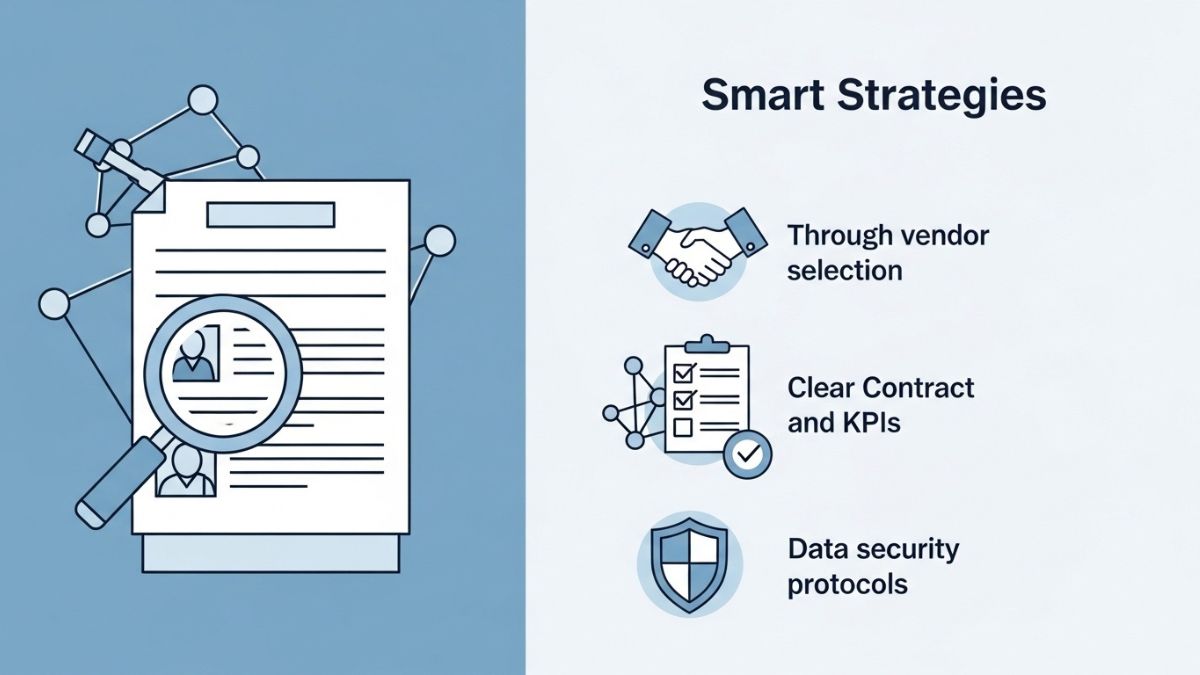
Outsourcing customer service has become a strategic solution for businesses seeking to improve support operations, reduce costs, and scale service delivery. Whether a company wants 24/7 coverage, multilingual support, or better operational efficiency, can provide flexible solutions when managed effectively. As customer expectations continue rising, many organizations view as a way to strengthen support while focusing internal resources on core business priorities.
The decision to outsource customer support involves more than reducing expenses. It often includes evaluating service quality, response speed, technology integration, and customer experience outcomes. A successful outsourcing strategy balances efficiency with consistent service standards.
This guide explores , including benefits, risks, models, key considerations, and best practices for long-term success.
What Is Outsourcing Customer Service
Outsourcing customer service refers to using a third-party provider to manage some or all customer support functions.
These services may include:
Phone support
Email support
Live chat
Technical assistance
Order support
Multilingual service
| Service Area | Common Support Function |
|---|---|
| Phone Support | Customer inquiries |
| Email Support | Issue resolution |
| Live Chat | Real-time assistance |
| Technical Support | Product help |
Businesses may outsource selected channels or entire support operations.
Why Businesses Use Outsourcing Customer Service
There are several reasons businesses consider.
Common goals include:
Cost management
Scalability
Expanded coverage
Access to support expertise
Operational flexibility
| Reason | Potential Benefit |
|---|---|
| Cost Efficiency | Lower overhead |
| Scalability | Easier growth support |
| Coverage Expansion | Extended availability |
| Expertise Access | Specialized support |
These advantages often drive interest.
Benefits of Outsourcing Customer Service
may provide multiple advantages.
Cost Efficiency
Third-party support can sometimes reduce:
Staffing costs
Training expenses
Infrastructure overhead
Scalability Support
Outsourced teams may help manage:
Seasonal spikes
Growth periods
Higher ticket volume
Broader Support Coverage
Some providers offer:
24/7 support
Multilingual service
Global customer assistance
| Benefit | Possible Impact |
|---|---|
| Cost Support | Better resource allocation |
| Scalability | Improved flexibility |
| Expanded Coverage | Better responsiveness |
| Specialized Teams | Stronger support handling |
These benefits can be significant when aligned with business needs.
Challenges in Outsourcing Customer Service
can also present challenges.
Potential concerns may include:
Quality inconsistency
Brand voice differences
Communication gaps
Less direct control
Customer experience risks
| Challenge | Possible Risk |
|---|---|
| Quality Variation | Service inconsistency |
| Brand Misalignment | Customer confusion |
| Communication Gaps | Resolution delays |
| Reduced Control | Oversight concerns |
Recognizing risks supports better planning.
Outsourcing Customer Service Models
There are several outsourcing models.
Full Outsourcing
A provider handles most support functions.
Partial Outsourcing
Specific channels or tasks are outsourced.
Hybrid Support Model
Internal teams and outsourced teams share responsibilities.
| Model | Primary Use |
|---|---|
| Full Outsourcing | Comprehensive support management |
| Partial Outsourcing | Selective support functions |
| Hybrid Model | Shared service approach |
The right model depends on business priorities.
Outsourcing Customer Service and Cost Considerations
Cost is often a major factor.
Businesses may evaluate:
Pricing structures
Service-level costs
Technology fees
Performance-related pricing
| Cost Factor | Why It Matters |
|---|---|
| Pricing Model | Budget planning |
| Service Scope | Value comparison |
| Technology Costs | Total expense visibility |
| Performance Terms | Accountability |
Cost should be evaluated alongside quality.
How to Choose an Outsourcing Customer Service Provider
Choosing the right provider is critical.
Factors to consider may include:
Industry experience
Support quality standards
Technology capabilities
Security practices
Scalability capacity
Provider Selection Factors
| Priority | Evaluation Focus |
|---|---|
| Experience | Relevant expertise |
| Quality Standards | Service consistency |
| Technology | Operational support |
| Security | Data protection |
Strong provider evaluation often reduces risk.
Service Quality in Outsourcing Customer Service
Service quality often determines success.
Important quality factors may include:
Response speed
Resolution quality
Customer satisfaction support
Agent training standards
| Quality Factor | Possible Impact |
|---|---|
| Response Time | Faster service |
| Resolution Quality | Better outcomes |
| Training | Improved interactions |
| Satisfaction Focus | Stronger customer experience |
Quality metrics often matter as much as price.
Outsourcing Customer Service and Technology
Technology plays a major role.
Important tools may include:
CRM systems
Help desk software
Chat platforms
Analytics tools
Knowledge bases
| Technology Tool | Possible Benefit |
|---|---|
| CRM Systems | Better customer records |
| Help Desk Tools | Efficient workflows |
| Analytics | Performance visibility |
| Knowledge Base | Faster support |
Technology can influence efficiency and consistency.
Training and Brand Alignment in Outsourcing Customer Service
Brand consistency often matters.
Training may support:
Tone alignment
Policy understanding
Product knowledge
Customer handling standards
| Training Focus | Why It Matters |
|---|---|
| Brand Voice | Consistent experience |
| Product Knowledge | Better support |
| Policy Understanding | Accurate handling |
| Customer Skills | Stronger interactions |
Training often helps reduce service gaps.
Common Mistakes in Outsourcing Customer Service
Some mistakes can reduce results.
Examples include:
Choosing only by price
Weak oversight
Poor performance tracking
Unclear expectations
| Mistake | Potential Problem |
|---|---|
| Price-Only Decisions | Quality risk |
| Weak Oversight | Inconsistency |
| Poor Metrics | Limited accountability |
| Unclear Expectations | Misalignment |
Avoiding these issues may improve outcomes.
Outsourcing Customer Service and Customer Experience
Customer experience should remain central.
Support quality can affect:
Retention
Brand reputation
Customer trust
Satisfaction levels
| Experience Factor | Potential Impact |
|---|---|
| Faster Support | Better satisfaction |
| Consistent Service | Stronger trust |
| Quality Resolution | Improved retention |
| Positive Interactions | Brand support |
Customer experience often determines long-term value.
Key Metrics for Outsourcing Customer Service
Performance measurement matters.
Common metrics may include:
Response time
Resolution rate
Customer satisfaction indicators
Service-level performance
| Metric | Purpose |
|---|---|
| Response Time | Speed tracking |
| Resolution Rate | Effectiveness |
| Satisfaction Indicators | Experience measurement |
| Service Levels | Contract performance |
Metrics help support accountability.
Outsourcing Customer Service for Small Businesses
Small businesses may use outsourcing for:
Cost flexibility
Extended support hours
Limited internal staffing support
Growth readiness
| Small Business Need | Helpful Benefit |
|---|---|
| Limited Staff | Support expansion |
| Budget Focus | Flexible costs |
| Growth Support | Scalability |
| Coverage Needs | Broader service |
Outsourcing may provide flexibility in early growth stages.
Common Questions About Outsourcing Customer Service
What is outsourcing customer service?
It refers to using external providers to manage customer support functions.
Is outsourcing customer service cost effective?
It may be, depending on quality, scope, and operational needs.
Can outsourcing customer service improve support quality?
It can, when providers are well managed and aligned.
What is the biggest risk in outsourcing customer service?
Service inconsistency is often considered a major concern.
Key Insights About Outsourcing Customer Service
Several themes often matter most.
| Key Insight | Explanation |
|---|---|
| Provider Fit Matters | Quality depends on alignment |
| Oversight Is Essential | Monitoring supports results |
| Customer Experience Comes First | Service quality matters |
| Metrics Drive Accountability | Measurement supports performance |
These factors often guide stronger decisions.
Future Trends in Outsourcing Customer Service
The industry continues evolving.
Important trends may include:
AI-supported service models
Omnichannel support growth
Greater analytics use
Personalized support improvements
| Trend | Potential Benefit |
|---|---|
| AI Support | Greater efficiency |
| Omnichannel Growth | Better customer coverage |
| Analytics Expansion | Improved decisions |
| Personalization | Stronger experience |
These trends may shape future strategies.
Building a Strategy for Outsourcing Customer Service
A strong strategy may include:
Clear goals
Provider evaluation
Performance measurement
Ongoing optimization
| Strategy Step | Purpose |
|---|---|
| Goal Definition | Direction |
| Provider Review | Better fit |
| Metrics Setup | Accountability |
| Optimization | Continuous improvement |
A structured approach often supports better outcomes.
Conclusion
Outsourcing customer service can be a valuable strategy when businesses balance efficiency, service quality, and customer experience. While potential benefits include scalability, cost support, and expanded coverage, success often depends on provider selection, performance oversight, and strong alignment with business goals.
By evaluating risks, choosing the right model, monitoring quality metrics, and maintaining customer experience standards, businesses can make a stronger long-term solution.
For organizations considering outsourcing custo, informed planning is often the key to smarter decisions and sustainable results.
-
 CRYPTO9 months ago
Crypto.com Credit Card: Complete Guide to Rewards, Benefits, and How It Works
-

 HEALTH9 months ago
Benefits of Drinking Lemon with Warm Water Daily
-
 BUSINESS7 months ago
Outsourcing Customer Service: A Complete Guide to Benefits, Challenges, and Smart Strategies
-

 BLOG7 months ago
Soundgasm: A Complete Guide to the Popular Audio Sharing Platform
-

 BUSINESS8 months ago
How to Effectively Use Betanden for Enhanced Productivity
-

 TECHNOLOGY10 months ago
Fappelo: A Complete Guide to Digital Innovation and Brand Growth
-

 BUSINESS8 months ago
Deshoptec com: A Complete Guide to Understanding Deshoptec com in the Modern E-Commerce World
-

 HEALTH9 months ago
Palo Azul Benefits: Complete Guide to Uses, Nutrition, and Wellness Potential