
HEALTH
Leg Workout: A Simple Routine That Actually Builds Strength


Most people train their legs last, if they train them at all. Arms and chest get the attention; legs get a quick set of squats tacked on at the end, or skipped entirely when the week gets busy. That is backwards. Your legs carry you everywhere, and they hold the biggest muscles in your body — training them properly changes how strong, stable and energetic you feel in ordinary life, from climbing stairs to carrying groceries.
The good news is that a useful leg workout is short. You do not need ten exercises. You need a handful of movements done well, twice a week, with a little progression over time.
The four movements that cover everything
A complete leg session needs one squat pattern, one hinge, one single-leg move and one calf exercise. That is it.
Squats are the foundation. Feet shoulder-width apart, weight through the whole foot, knees tracking over the toes, chest tall. Go as low as you can while keeping your heels down and your back flat. If bodyweight squats feel easy, hold a dumbbell at your chest or a backpack full of books.
Romanian deadlifts train the hinge — the hamstrings and glutes. Hold a weight in front of your thighs, push your hips back, keep a soft bend in the knees and a flat back, and lower until you feel a stretch in the back of your legs. Most people rush this one. Slow down; the stretch is the point.
Lunges fix the imbalances squats hide. Step forward, lower until both knees are near 90 degrees, and push back through the front heel. If balance is a problem, hold a chair or a wall at first — nobody is judging your balance, and wobbling is how it improves.
Calf raises finish the job. Stand on a step, rise up on your toes, pause for a second at the top, and lower slowly. Calves respond to slow, controlled reps more than to heavy weight.
A routine you can do in 25 minutes
Warm up for five minutes — walk, march in place, a few easy squats. Then do three sets of each movement: 8–12 squats, 10 Romanian deadlifts, 8 lunges per leg, 12–15 calf raises. Rest 60–90 seconds between sets. Twice a week is enough to start; leave at least a day between sessions.
Progress is simple and boring, which is why it works. When you can finish all three sets comfortably, add a little weight, or one or two reps. Write it down — a note on your phone is fine — because memory lies about what you lifted last week.
The mistakes that stall people
The most common one is skipping warm-ups and jumping straight to heavy squats with cold muscles. The second is depth without control: bouncing at the bottom of a squat with a rounded back. The third is doing legs once every two weeks and wondering why they never get stronger. Consistency beats intensity here, every time.
A word of caution, plainly: if you have knee pain, a recent injury or a medical condition, check with a doctor or physiotherapist before starting a new routine, and stop any movement that causes sharp pain. Soreness the next day is normal; joint pain is not.
Strong legs are not about looking a certain way. They are about moving well at forty, fifty and sixty — getting up from a chair without thinking about it, walking up a hill without stopping, and keeping the balance that keeps you independent. That starts with one short session this week, and another one a few days later. Sleep supports recovery too — the same steady schedule that helps deep sleep helps muscles repair after training.
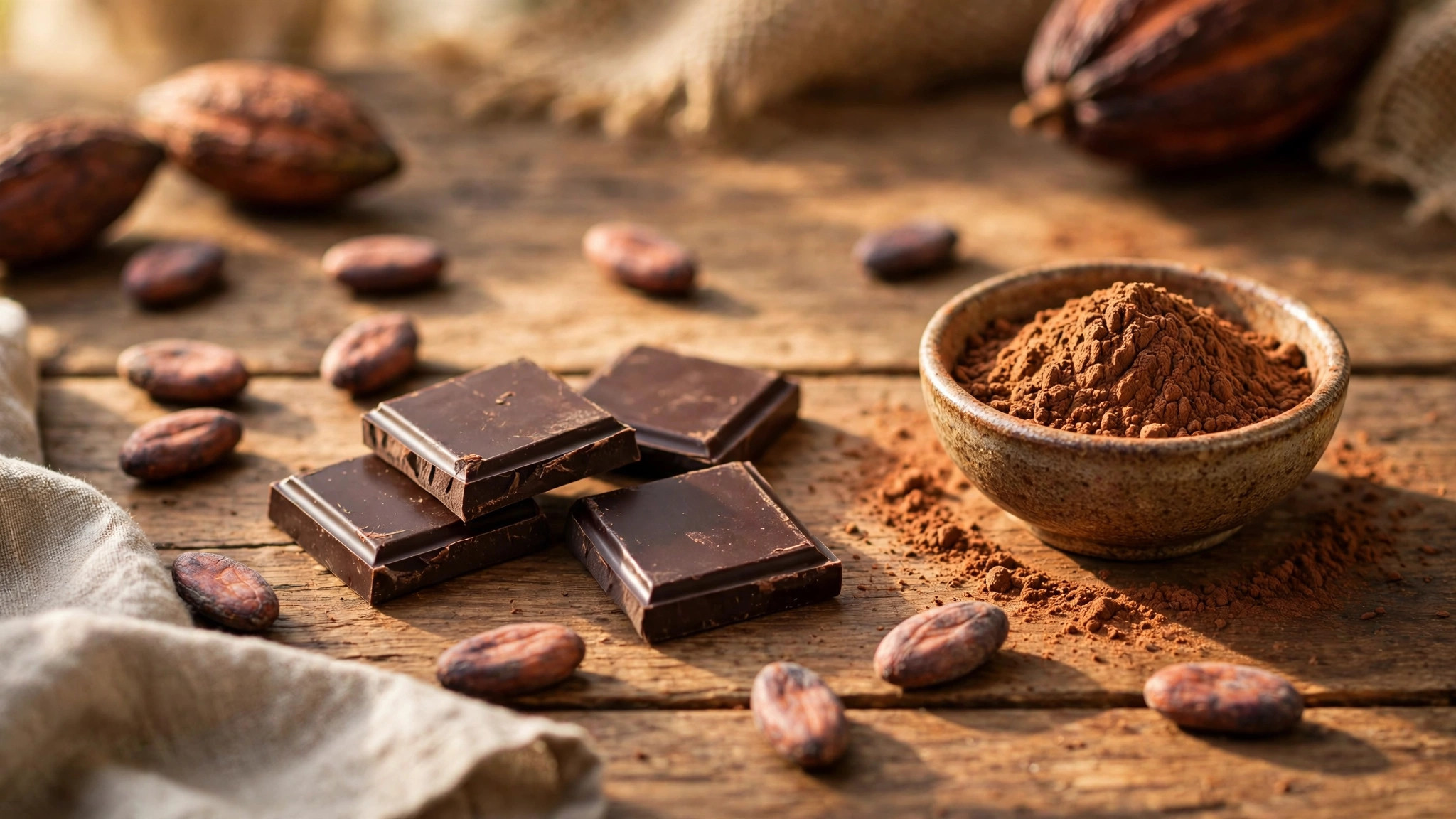
Dark chocolate has a better reputation than almost any other sweet. It is the one treat people mention with a clear conscience, usually with the words “it’s actually good for you”. There is real research behind that reputation — and also a fair amount of exaggeration. The honest version is more interesting than either extreme.
What is actually in it
The part that matters is the cocoa. Cocoa is rich in flavanols, a group of plant compounds that help blood vessels relax and improve blood flow. That is the mechanism behind most of the benefits researchers study: better circulation, modest blood pressure effects, and support for heart health over time.
The catch is dose and dilution. A bar that is 70% cocoa has far more flavanols than a bar that is 30% cocoa and mostly sugar and milk. Milk chocolate, for all practical purposes, is a different food — the cocoa content is too low and the sugar too high for the same effects. When studies talk about chocolate and health, they are talking about dark chocolate, usually 70% cocoa or more, in small amounts.
The benefits with real evidence behind them
Heart and blood pressure. This is the strongest area. Large reviews of studies have found that regular small amounts of high-cocoa chocolate are linked with slightly lower blood pressure and a lower risk of heart disease. The effect is modest — a few points of blood pressure, not a transformation — and it shows up in people who eat it regularly over months, not after one bar.
Blood flow and brain function. Better circulation means better blood flow to the brain as well. Some short-term studies show improved attention and reaction time after flavanol-rich cocoa, and there is early research into long-term brain health. The evidence here is promising rather than settled, and no serious researcher would call chocolate a brain supplement.
Mood. Chocolate genuinely seems to lift mood in the short term, and it is not only the sugar. Cocoa contains small amounts of compounds that affect feel-good chemicals in the brain, and the sensory experience — taste, smell, texture — does some of the work too. It is a real effect and a small one; it will not fix a bad week, but it can improve an afternoon.
What it is not
It is not a weight-loss food, whatever some headlines claim. Dark chocolate is calorie-dense — about 150–170 calories for a 30-gram serving — and eating a whole bar a day will add weight, which cancels out the heart benefits it is supposed to provide. It is also not a substitute for the basics: the same reviews that find benefits for chocolate find much larger ones for sleep, movement and vegetables. A square of dark chocolate after dinner is a pleasure with a small bonus, not a health strategy on its own.
Sugar is the other thing to watch. Some “dark” bars are sweetened heavily, and flavanol content drops as sugar and fat rise. The label matters more than the marketing: look for cocoa as the first ingredient, 70% or higher, and a short ingredient list.
How much, and how to enjoy it
Most studies use around 20–30 grams a day — one or two squares — of 70%+ dark chocolate. That is a useful ceiling, not a target: a few squares a few times a week is plenty. Eat it slowly, let it melt rather than chewing it like a biscuit, and notice the flavour. Part of the point of a treat is actually tasting it.
If you are managing blood sugar, blood pressure or a heart condition, the general guidance still applies — small amounts, high cocoa, and a conversation with your doctor about your overall diet rather than about one food. And like any habit that sticks, it works best as part of a routine: a small pleasure after dinner, a walk during the day, and a regular bedtime. The sleep habits in our deep sleep guide do more for your heart than any single food will.

REM sleep is the dreaming stage of sleep. It is when the brain processes memories, works through emotions and consolidates what you learned during the day. Unlike deep sleep, which is front-loaded in the night, REM sleep gets longer with each cycle — the longest REM periods come in the last third of the night. That is why cutting the night short hits REM first.
1. Sleep long enough to reach the long REM periods
REM cycles repeat roughly every 90 minutes and get longer each time. If you sleep six hours, you miss much of the longest REM of the night. Most adults need seven to nine hours to get a full share of REM sleep.
2. Keep a steady schedule
REM sleep is sensitive to your body clock. Going to bed and waking at irregular times scatters your sleep cycles, and REM is usually the loser. A regular schedule helps the cycles line up night after night. A steady morning helps too — daylight and a simple drink such as lemon with warm water set the day up well.
3. Protect the last hours of the night
Because REM is concentrated late in the night, anything that wakes you at 4 or 5 am — an alarm set too early, a noisy street, a bright room — cuts into REM directly. Blackout curtains and a quiet room pay off most in those final hours.
4. Be careful with alcohol and late-night sedatives
Alcohol suppresses REM sleep in the first half of the night, and the body often rebounds with broken, vivid dreaming later. Sleeping pills can also change the balance of sleep stages. If you use any sleep aid regularly, ask a doctor how it affects REM.
5. Move during the day
Regular exercise is linked with healthier sleep architecture overall, including more stable REM. You do not need intense workouts — a brisk 30-minute walk most days is enough to make a difference.
6. Manage stress before bed
REM sleep is where the brain processes the day’s emotions. Going to bed with a racing mind does not stop REM, but it can fragment it. A short wind-down — writing tomorrow’s to-do list on paper, slow breathing, or reading something light — gives the brain a cleaner start to the night.
7. Do not chase REM with gadgets
Supplements and devices that promise “more REM” are mostly unproven. The reliable levers are boring ones: enough hours, a regular schedule, no alcohol late, and a dark, quiet room. If you are curious about supplements, our guide comparing magnesium citrate vs glycinate explains the two common forms.
Frequently asked questions
What is REM sleep for? It supports memory, learning and emotional processing, and it is the stage in which most vivid dreaming happens.
How much REM sleep is normal? Roughly 20–25% of the night for most adults — about 90 minutes to two hours in an eight-hour night.
Why do I remember dreams some mornings and not others? You usually remember a dream if you wake during or just after a REM period. Waking at other points means the dream fades before you notice it.
REM sleep rewards consistency more than effort. Give yourself a full night, keep the schedule steady, and the long dreaming periods at the end of the night will take care of themselves.

Deep sleep is the part of the night your body uses for physical recovery. Muscles repair, the immune system does maintenance work, and the brain clears away the waste products of the day. Most adults spend roughly 13–23% of the night in deep sleep, and it is concentrated in the first half of the night — which is why the first few hours after bedtime matter so much.
1. Keep the same wake time every day
Your body runs on a clock, and deep sleep follows it. Waking up at the same time every day — including weekends — trains that clock, so sleep pressure builds at the right hour and deep sleep arrives earlier in the night. A fixed wake time matters more than a fixed bedtime.
2. Get daylight in the morning
Bright light in the first hour after waking tells your brain the day has started. That signal sets the timer for melatonin release about 14–16 hours later. A 10–20 minute walk outside in the morning is one of the simplest ways to sleep deeper at night. A morning walk also pairs well with a simple morning drink — many people start the day with lemon with warm water.
3. Exercise — but finish a few hours before bed
Regular exercise, especially in the morning or afternoon, is one of the most reliable ways to increase deep sleep. Vigorous exercise very close to bedtime can raise body temperature and alertness, so aim to finish at least three hours before you plan to sleep.
4. Make the bedroom cool, dark and quiet
Deep sleep comes more easily when your core temperature can drop. Most people sleep best in a room around 18–20°C (65–68°F). Blackout curtains or an eye mask block light, and earplugs or a steady fan sound cover noise.
5. Cut caffeine earlier than you think
Caffeine has a half-life of about five to six hours, so a coffee at 4 pm can still be active at 10 pm. It does not just make falling asleep harder — it can lighten the sleep you do get. Try a caffeine cut-off at least eight hours before bedtime.
6. Skip the nightcap
Alcohol may make you feel drowsy, but it fragments sleep and suppresses deep sleep in the first half of the night. If you drink, keep it to one drink and finish it at least three hours before bed.
7. Wind down without a screen
The last 30–60 minutes before bed are a runway, not a race. Dim the lights, read a book, stretch, or take a warm shower — the warm water raises skin temperature and then lets it fall, which mimics the natural cooling that precedes deep sleep. Some people also look into magnesium before bed — our guide compares magnesium citrate vs glycinate and which form suits different needs.
8. Keep naps short and early
A 20-minute nap before 3 pm can help. A long or late nap steals sleep pressure from the night and pushes deep sleep later, or reduces it altogether.
9. Give it two weeks
Sleep habits do not change overnight. Try these changes together for at least two weeks and notice how you feel in the morning — deep sleep shows up as waking up rested rather than groggy.
Frequently asked questions
How much deep sleep do I need? Most adults get about 1–2 hours a night, roughly 13–23% of total sleep. The exact number varies by age and person.
Can I track deep sleep accurately at home? Wearables give a rough estimate, not a medical measurement. Use them to spot trends over weeks, not to judge a single night.
Does deep sleep decline with age? Yes, it tends to decrease gradually as we get older, which makes the habits above more — not less — worth keeping.
Deep sleep is not something you can force; it is something you make room for. A steady schedule, morning light, movement during the day and a cool, dark room give your body the conditions it needs to do the work. Deep sleep is only one stage of the night — our guide on how to get more REM sleep covers the dreaming stage that fills the later part of the night.
-
 CRYPTO9 months ago
Crypto.com Credit Card: Complete Guide to Rewards, Benefits, and How It Works
-

 HEALTH9 months ago
Benefits of Drinking Lemon with Warm Water Daily
-

 BUSINESS7 months ago
Outsourcing Customer Service: A Complete Guide to Benefits, Challenges, and Smart Strategies
-

 BLOG7 months ago
Soundgasm: A Complete Guide to the Popular Audio Sharing Platform
-
 BUSINESS8 months ago
How to Effectively Use Betanden for Enhanced Productivity
-

 BUSINESS8 months ago
Deshoptec com: A Complete Guide to Understanding Deshoptec com in the Modern E-Commerce World
-

 TECHNOLOGY10 months ago
Fappelo: A Complete Guide to Digital Innovation and Brand Growth
-

 HEALTH9 months ago
Palo Azul Benefits: Complete Guide to Uses, Nutrition, and Wellness Potential