TECHNOLOGY
Syrenis Strategic Initiatives: How the Privacy Platform Is Scaling Beyond Compliance


Privacy used to sit in a legal folder. Today it sits on the growth agenda. That shift is the real story behind Syrenis strategic initiatives — a multi-year push to turn consent, preferences, and policy control into infrastructure that large enterprises can actually run.
Syrenis is an enterprise privacy-tech company. It helps global brands capture, sync, and honor customer choices across websites, apps, CRM systems, and marketing stacks. The company has long been known for high-volume consent work. What changed recently is the ambition around it: new leadership, a US footprint, a unified brand, consulting partnerships, and a product story that treats compliance as a starting point, not the finish line.
If you work in privacy, marketing operations, or digital legal, those moves matter. They show how a specialist vendor is trying to become the system of record for customer permission — at Fortune 500 scale.
What Syrenis Does in Plain Terms
Syrenis builds software that records what a customer said yes or no to, then pushes that decision into the systems that actually use the data.
That sounds simple. It is not. A typical enterprise has:
- Multiple brands and domains
- Different laws by country and US state
- Cookie banners, preference centers, call centers, and mobile apps
- Marketing clouds, analytics tools, and data warehouses that all need the same answer
Without a single source of truth, teams invent local workarounds. Marketing keeps a list. Legal keeps another. IT writes one-off APIs. Audits then become archaeology.
Syrenis positions its platform as the layer that collects choices, matches them to identities, and enforces them in near real time. The older product name many buyers still remember is Cassie. The company has since folded product identity into the Syrenis brand itself.
Why enterprises buy this category
Teams usually arrive after one of three events: a new privacy law, a failed audit, or a marketing program that cannot use first-party data because consent records do not match.
The buying question is rarely “Do we need a banner?” It is “Can we prove, everywhere, that we honored the latest choice?”
The Core Syrenis Strategic Initiatives Driving Growth
Several moves now sit together as one strategy: leadership, geography, brand, product breadth, and delivery partners.
| Initiative | What changed | Why it matters to buyers |
|---|---|---|
| Leadership reset | New CEO plus finance and commercial executives | Signals a growth company, not a maintenance vendor |
| North America hub | Dedicated US go-to-market presence, Atlanta base | Puts sellers and support closer to US state-law complexity |
| Brand unification | Legacy product names retired under Syrenis | Makes the company easier to evaluate as an enterprise platform |
| Partner model | Consulting alliance for program design and rollout | Closes the gap between software and operating model |
| Platform expansion | Consent plus preferences, notices, rights, and risk | Moves the sale from banner tool to privacy operations |
Those five threads are easier to understand one by one.
New leadership and a growth mandate
Adam Binks became CEO after joining the board, then the company added senior finance and commercial leaders. Public comments around the 25th anniversary pointed to a target of more than doubling revenue over five years.
That kind of target changes product priorities. A maintenance business ships patches. A growth business ships features that win multi-year enterprise contracts: multi-jurisdiction policy, identity-linked records, audit trails, and integrations that IT will actually accept.
US expansion as a market bet
The United States is no longer one privacy regime. It is a stack of state laws with different rights, definitions, and timelines. Enterprises with national brands feel that immediately.
Opening a US operation is therefore not a vanity office. It is a response to how buyers purchase: they want local conversations, faster implementation, and people who already know the difference between a notice obligation in one state and an opt-out signal in another.
Brand relaunch as a positioning play
A brand refresh sounds cosmetic until you look at what it replaced. Unifying under Syrenis tells the market the company is selling a platform, not a single widget.
That matters in procurement. Enterprise RFPs ask who owns consent, preferences, notices, and subject rights. A fragmented product family makes those answers harder. One brand makes the story simpler: one vendor, one record, many channels.
Partnerships that turn software into a program
Technology does not implement itself. Privacy programs fail when legal writes a policy, marketing designs a banner, and nobody owns the operating rhythm.
The consulting partnership with Myna is a classic “strategy plus execution” move. Syrenis supplies the data layer. The partner helps design the program, map processing activities, and roll the platform into real teams. Buyers who have been burned by shelfware notice that combination.
From consent tool to privacy operations platform
The product map now stretches beyond banners:
- Consent capture and enforcement
- Preference centers and channel-level choices
- Privacy notice management
- Data subject rights intake and workflow
- Risk and policy visibility
That is the difference between a compliance checkbox and an operations system. Marketing can personalize with consented data. Legal can produce an audit trail. IT can stop writing one-off sync jobs.
How These Initiatives Map to Real Enterprise Problems
Strategy only counts if it solves Tuesday morning work.
Multi-brand, multi-jurisdiction mess
A retailer with EU sites, US state storefronts, and a loyalty app needs different rules for the same person depending on location and channel. Manual matrices break. A configurable policy engine does not.
First-party data that marketing cannot use
After cookie deprecation and tighter ad rules, brands need consented first-party profiles. If preference data lives in five systems, campaigns stall. A synchronized preference record is what lets personalization proceed without a legal veto.
Audit pressure that never turns off
Regulators and internal audit both ask the same question: show the history. Immutable consent logs, notice versions, and rights-request records are not nice-to-haves. They are the evidence pack.
Practical Example: A Global Brand Cleaning Up Consent
Imagine a financial services group with a UK parent, US subsidiaries, and a marketing cloud that fires emails from three regions.
Before a platform like this, the group might:
- Run different cookie tools per brand
- Store call-center opt-outs in a spreadsheet
- Update CRM flags once a week
- Discover mismatches only after a complaint
After a coordinated rollout, the same group would:
- Capture consent at every digital and assisted touchpoint
- Match records to a customer identity
- Push the latest preference into CRM, ESP, and analytics in near real time
- Keep an audit log that legal can export without a project team
That is the operating picture Syrenis is selling. The strategic initiatives exist to make that picture believable at scale: US coverage, partner delivery, and a brand that says “platform,” not “banner.”
Comparison Snapshot: Banner Tool vs Enterprise Privacy Platform
| Capability | Lightweight banner tool | Enterprise platform approach |
|---|---|---|
| Scope | Website cookies | Web, app, CRM, offline, identity |
| Identity | Device or session | Cross-device and known customer |
| Policy | One template | Jurisdiction and brand rules |
| Integrations | A few tags | Hundreds of systems plus APIs |
| Evidence | Basic log | Immutable history for audits |
| Delivery | Self-serve setup | Program design plus implementation |
Most mid-market teams can live on the left. Highly regulated groups with 1 billion-plus records cannot.
Pros and Cons of Following the Syrenis Path
Pros
- One record of customer choice reduces legal and marketing conflict
- Real-time enforcement protects campaigns and call-center promises
- Broader modules (notices, rights, risk) limit vendor sprawl
- Partner-led implementation can shorten time-to-value
- US presence helps organizations living inside state privacy law
Cons
- Enterprise platforms are not cheap, and there is no meaningful free tier
- Implementation still needs internal owners in legal, marketing, and IT
- Unifying brands and jurisdictions is a change-management project, not a plugin
- Buyers must validate integration depth against their exact stack
- A growth-stage vendor roadmap can move faster than some risk teams prefer
None of those cons are unique to one company. They are the cost of treating privacy as infrastructure.
Common Mistakes Companies Make With Consent Strategy
Privacy programs stall for predictable reasons.
- Buying a banner and calling the program done
- Letting each brand pick its own tool
- Storing opt-outs where marketing cannot see them
- Ignoring offline channels such as call centers and stores
- Writing policies that the tech stack cannot enforce
- Starting implementation without a data map
- Treating preference centers as a legal page instead of a product
- Skipping identity resolution, then wondering why records conflict
If a strategic vendor relationship is going to work, those mistakes have to be named in the kickoff, not discovered in year two.
Best Practices for Evaluating Enterprise Consent Platforms
Use a short, practical checklist.
- Start with systems, not screens. List every place a preference must land.
- Demand identity logic. Session cookies are not enough for known customers.
- Test a multi-jurisdiction rule. One person, two regions, two lawful bases.
- Ask for the audit export. If legal cannot pull history quickly, keep walking.
- Map implementation owners. Software without a RACI becomes shelfware.
- Check partner capacity. Complex rollouts need more than a success email.
- Measure time-to-enforce. The metric that matters is how fast a new no becomes a system-wide no.
Those steps keep a vendor conversation honest.
What to Watch Next
Three signals will tell you whether this strategy is landing.
First, whether US pipeline converts into multi-year enterprise logos, not just banner replacements. Second, whether risk, notices, and rights modules get adopted beside consent, or stay as brochure items. Third, whether partner-led deployments produce referenceable operating models in regulated industries such as pharma, finance, and automotive.
Gartner and similar analyst mentions help with awareness. Customer proof in messy, multi-brand environments is what will decide category leadership.
Conclusion
Syrenis strategic initiatives are not a single announcement. They are a bundle: new executives, a US commercial base, a unified brand, a consulting alliance, and a wider privacy-operations product.
The through-line is clear. The company wants enterprises to stop treating consent as a website widget and start treating it as a system of record for customer permission. If that bet holds, privacy teams get cleaner audits, marketers get usable first-party data, and IT gets fewer one-off integrations.
The work still sits with the buyer. Tools do not replace ownership. But the direction of travel is the one most global organizations are already being forced to take.
5 SEO FAQs
What are Syrenis strategic initiatives?
They are the company’s growth moves in leadership, US expansion, brand unification, consulting partnerships, and platform expansion from consent tools into broader privacy operations.
Is Syrenis only a cookie consent banner?
No. Cookie capture is one entry point. The platform is built for enterprise consent, preferences, notices, rights requests, and policy control across systems.
Why did Syrenis expand in the United States?
US state privacy laws created a large, complex buying market. A local go-to-market team helps enterprises that need faster support and jurisdiction-aware implementation.
Who typically buys a platform like this?
Privacy, legal, marketing operations, and IT leaders at large, multi-brand organizations in regulated sectors such as finance, healthcare, retail, and automotive.
How should a company start a consent modernization project?
Map every system that uses customer data, define identity rules, pick jurisdiction logic, assign owners, then select a platform that can enforce the latest choice everywhere those systems live.


The NLP Problem Hidden in Plain Sight
Most risk adjustment software uses natural language processing (NLP) to extract diagnosis information from clinical notes. Early NLP systems were rule-based: they matched specific text patterns to diagnosis codes using hand-built dictionaries. Newer systems use machine learning models trained on annotated clinical text. Both approaches are marketed as “AI-powered” coding assistance. Neither, in its standard form, is adequate for the documentation quality assessment that current enforcement demands.
The gap is between extraction and evaluation. Standard NLP is designed to extract: identify that a clinical note contains language related to diabetes, CKD, or heart failure. It reads the text and recognizes medical concepts. That’s extraction. What it doesn’t do, without purpose-built clinical reasoning, is evaluate whether the documentation around that concept constitutes adequate evidence of active management.
Finding “diabetes mellitus type 2” in a clinical note is extraction. Determining that the note contains a current A1C result (monitoring), a provider assessment of glycemic control (assessment), and a medication adjustment decision (treatment), which together satisfy MEAT criteria, is evaluation. The first task is pattern recognition. The second requires clinical reasoning that standard NLP models weren’t designed for.
Why This Gap Produces Audit Failures
The OIG’s March 2026 audits provide direct evidence of this gap’s consequences. Error rates between 81% and 91% weren’t driven by systems failing to find diagnoses. The diagnoses were found. They appeared in charts. They mapped to HCCs. The failure was that the documentation didn’t prove active management. “History of stroke” was found by NLP and coded as an active HCC, but no current neurological management was documented. “DM2” was found and coded, but the note said “stable, continue meds” without any monitoring or assessment detail.
Standard NLP found these diagnoses correctly. It did its job. The problem is that finding a diagnosis and proving it’s actively managed are fundamentally different tasks. Systems that only do the first produce high identification rates and high audit failure rates simultaneously. The metrics look good. The audit outcomes don’t.
What Clinical Reasoning AI Does Differently
Purpose-built clinical AI for risk adjustment goes beyond extraction to evaluation. When the system identifies a diagnosis mention, it doesn’t just flag the concept. It searches the surrounding documentation for specific evidentiary elements: Is there a lab result demonstrating monitoring? Is there provider assessment language? Is there a documented treatment decision? Is there evidence of follow-up planning?
Each element maps to a specific MEAT criterion. The system presents the coder with a structured evidence assessment: “DM2 identified. Monitoring: A1C 7.2 referenced in note. Assessment: ‘glycemic control improved’ noted. Treatment: ‘continue metformin 1000mg, add SGLT2’ documented. MEAT status: 3 of 4 elements present.” The coder validates the assessment rather than performing it from scratch.
When evidence is missing, the system flags the gap explicitly: “History of stroke identified. Monitoring: no current neurological labs or imaging. Assessment: no provider assessment of neurological status. Treatment: no active stroke management documented. MEAT status: 0 of 4 elements present. Recommendation: do not submit without current management evidence.”
This output gives the coder the information needed to make a defensible decision. Submit where evidence is strong. Query the provider where evidence is missing but the condition appears clinically active. Skip where the documentation can’t support the code.
The Capability That Matters
Plans evaluating risk adjustment software should test whether the system performs clinical reasoning or just NLP extraction. Feed it a chart where a diagnosis appears in the problem list but has no MEAT evidence in the encounter note. If the system recommends the code, it’s doing extraction. If it flags the MEAT gap and recommends against submission, it’s doing evaluation. That distinction is the difference between technology that produces volume and technology that produces defensibility.
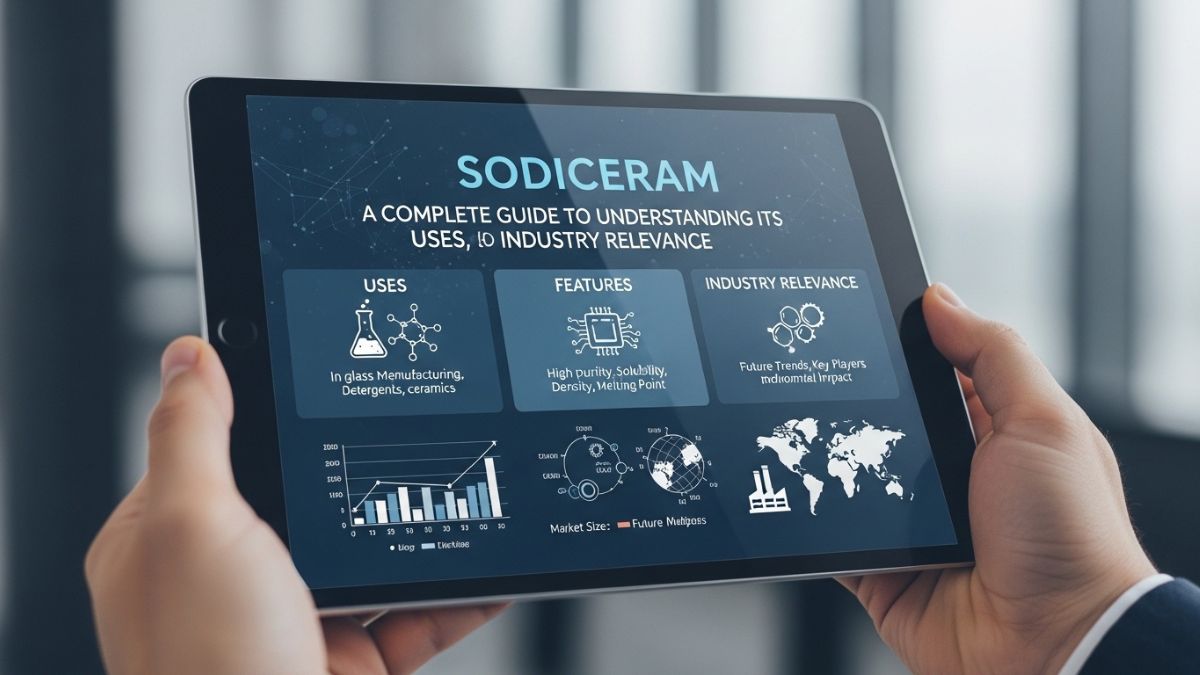
Sodiceram is a term that may be associated with ceramic materials, industrial solutions, specialized products, or branded applications depending on context. As interest in advanced materials and specialized manufacturing continues to grow, Sodiceram has gained attention among those researching product innovation, performance characteristics, and potential industrial uses. Understanding Sodiceram involves exploring its features, possible applications, material-related advantages, and broader relevance.
Whether referenced in relation to ceramic technologies, engineered materials, or product-focused solutions, Sodiceram can be examined through its practical value, durability considerations, and possible performance benefits. For businesses, buyers, and researchers, evaluating often involves understanding where it may fit and how it may offer advantages.
This guide explores , including possible uses, features, benefits, considerations, and future trends.
What Is Sodiceram
may refer to a concept associated with ceramic-based materials, products, or systems.
Depending on context, it may relate to:
Industrial applications
Material solutions
Surface technologies
Specialized ceramic products
Engineered components
| Category | Possible Relevance |
|---|---|
| Industrial Materials | Performance applications |
| Surface Technologies | Functional use |
| Ceramic Components | Structural support |
| Specialized Products | Targeted solutions |
Its interpretation may vary by industry context.
Core Features of Sodiceram
may be associated with several important features.
Potential features may include:
Durability
Heat resistance
Material stability
Structural reliability
Functional versatility
| Feature | Possible Benefit |
|---|---|
| Durability | Long-term use |
| Heat Resistance | High-temperature suitability |
| Stability | Reliable performance |
| Versatility | Broader applications |
These characteristics often influence interest.
Possible Applications of Sodiceram
may be discussed across several application areas.
Industrial Uses
Potential industrial applications may include:
Manufacturing processes
Specialized components
Protective surfaces
Performance materials
Commercial Uses
Possible commercial uses may include:
Product integration
Surface solutions
Functional installations
Technical Uses
Some technical contexts may involve:
Engineered systems
High-performance environments
Specialized support roles
| Application Area | Potential Use |
|---|---|
| Industrial | Process support |
| Commercial | Functional solutions |
| Technical | Specialized systems |
Application suitability often depends on needs.
Material Properties Associated With Sodiceram
Material-related performance often shapes evaluation.
Possible properties may include:
Hardness
Resistance qualities
Structural consistency
Environmental tolerance
| Property | Why It Matters |
|---|---|
| Hardness | Durability support |
| Resistance | Performance protection |
| Structural Consistency | Reliability |
| Environmental Tolerance | Broader use potential |
Material properties often affect value.
Benefits of Sodiceram
Potential benefits may include:
Long service life
Performance stability
Application flexibility
Support for demanding conditions
| Benefit | Possible Impact |
|---|---|
| Longevity | Better value potential |
| Stability | Consistent performance |
| Flexibility | Wider usefulness |
| Condition Support | Better durability |
These benefits may influence adoption.
Sodiceram in Industrial Environments
Industrial use often emphasizes performance.
Possible priorities may include:
Reliability under stress
Resistance support
Durability in demanding settings
Operational consistency
| Industrial Need | Potential Relevance |
|---|---|
| Reliability | Stronger performance |
| Resistance | Protection support |
| Durability | Long-term value |
| Consistency | Operational stability |
These factors may matter in industrial evaluation.
How to Evaluate Sodiceram
Evaluating may involve considering:
Application fit
Material requirements
Performance expectations
Environmental conditions
Budget considerations
Evaluation Factors
| Priority | Focus |
|---|---|
| Application Fit | Practical suitability |
| Material Needs | Functional alignment |
| Performance Goals | Expected outcomes |
| Budget | Value assessment |
Evaluation often improves decisions.
Sodiceram and Durability Considerations
Durability is often a major factor.
Areas to consider may include:
Wear resistance
Long-term performance
Maintenance needs
Environmental exposure tolerance
| Durability Factor | Possible Benefit |
|---|---|
| Wear Resistance | Extended usability |
| Long-Term Stability | Reliability |
| Maintenance Needs | Operational efficiency |
| Exposure Tolerance | Broader applications |
Durability often supports value.
Common Mistakes When Assessing Sodiceram
Some mistakes may limit effective evaluation.
Examples include:
Ignoring application requirements
Overlooking material properties
Focusing only on cost
Not reviewing long-term performance
| Mistake | Potential Problem |
|---|---|
| Poor Fit Analysis | Limited performance |
| Ignoring Properties | Weak alignment |
| Cost-Only Focus | Lower value |
| No Long-Term Review | Hidden risks |
Avoiding these issues may improve decisions.
Sodiceram Compared by Key Factors
Different priorities may shape comparison.
| Comparison Factor | Evaluation Focus |
|---|---|
| Durability | Long-term performance |
| Flexibility | Application range |
| Stability | Reliability |
| Value | Practical return |
Comparison often helps selection.
Sodiceram and Maintenance Considerations
Maintenance may affect long-term outcomes.
Potential considerations may include:
Cleaning requirements
Inspection routines
Operational monitoring
Performance checks
| Maintenance Area | Benefit |
|---|---|
| Cleaning | Better upkeep |
| Inspection | Problem prevention |
| Monitoring | Performance support |
| Checks | Consistency |
Maintenance may support longevity.
Sodiceram in Commercial Applications
Commercial settings may prioritize:
Durability
Visual consistency
Functional performance
Cost efficiency
| Commercial Need | Potential Benefit |
|---|---|
| Durability | Longer use |
| Consistency | Better appearance |
| Performance | Functional value |
| Cost Efficiency | Budget support |
Commercial priorities may differ from industrial needs.
Common Questions About Sodiceram
What is Sodiceram?
may refer to a ceramic-related product, system, or material solution depending on context.
What are the benefits of Sodiceram?
Potential benefits may include durability, stability, and application flexibility.
Where can Sodiceram be used?
Possible uses may include industrial, commercial, and specialized technical environments.
How should Sodiceram be evaluated?
Evaluation often depends on performance needs, material fit, and long-term value.
Key Insights About Sodiceram
Several themes often matter most.
| Key Insight | Explanation |
|---|---|
| Fit Matters | Application alignment is important |
| Durability Supports Value | Longevity matters |
| Material Properties Matter | Performance depends on properties |
| Maintenance Supports Outcomes | Care affects results |
These insights often support stronger choices.
Future Trends Related to Sodiceram
Innovation may continue shaping interest.
Important trends may include:
Advanced material development
Higher-performance applications
Broader commercial uses
Improved engineering solutions
| Trend | Potential Benefit |
|---|---|
| Material Innovation | Better performance |
| Expanded Applications | Broader use |
| Engineering Advances | Improved solutions |
| Commercial Growth | Increased relevance |
These trends may influence future development.
Building a Strategy Around Sodiceram Selection
A practical approach may include:
Defining needs
Comparing material factors
Evaluating durability
Reviewing value considerations
| Strategy Step | Purpose |
|---|---|
| Define Needs | Better direction |
| Compare Factors | Informed selection |
| Evaluate Durability | Long-term planning |
| Review Value | Smarter decisions |
Structure often improves outcomes.
Sodiceram and Value Considerations
Value often depends on more than price.
Questions to consider:
Does it meet performance needs?
Is durability aligned with use?
Does it support long-term value?
Does it fit the intended application?
| Value Factor | Importance |
|---|---|
| Performance Fit | High |
| Durability | High |
| Application Match | High |
| Budget Alignment | Important |
The best value often depends on fit.
Practical Factors Before Choosing Sodiceram
Before choosing , some may review:
Use environment
Operational demands
Maintenance expectations
Performance priorities
| Practical Factor | Why It Matters |
|---|---|
| Use Environment | Suitability |
| Operational Demands | Performance fit |
| Maintenance Expectations | Lifecycle planning |
| Priorities | Better decisions |
Practical review often supports selection.
Conclusion
Sodiceram may represent a relevant option in contexts involving ceramic-related materials, specialized products, or performance-focused solutions. Its value often depends on factors such as durability, application fit, material properties, and long-term reliability.
By evaluating features, comparing priorities, and considering practical needs, buyers and decision-makers can make more informed choices related to .
For those exploring performance materials or specialized solutions, understanding can provide a stronger foundation for smarter decisions.
-

 HEALTH7 months ago
Benefits of Drinking Lemon with Warm Water Daily
-

 BLOG5 months ago
Soundgasm: A Complete Guide to the Popular Audio Sharing Platform
-
 BUSINESS5 months ago
Outsourcing Customer Service: A Complete Guide to Benefits, Challenges, and Smart Strategies
-

 BLOG7 months ago
Bijnesh: Meaning, Origin, Cultural Significance, and Modern Relevance
-
 CRYPTO7 months ago
Crypto.com Credit Card: Complete Guide to Rewards, Benefits, and How It Works
-

 BUSINESS7 months ago
Deshoptec com: A Complete Guide to Understanding Deshoptec com in the Modern E-Commerce World
-

 HEALTH7 months ago
Palo Azul Benefits: Complete Guide to Uses, Nutrition, and Wellness Potential
-
 BUSINESS6 months ago
How to Effectively Use Betanden for Enhanced Productivity