
BLOG
What Is FintechZoom.com? How to Use the Finance News Platform in 2026


If you landed here after typing fintechzoom.com into a search bar, you are not alone. People usually want a straight answer: is this a trading app, a news site, a data terminal, or something else entirely?
Here is the short version. FintechZoom.com is a financial media and market-information website. It publishes news and explainers on stocks, crypto, banking, payments, commodities, and the broader economy. It is not a brokerage. It does not hold your money. It does not execute trades.
That distinction matters. A lot of first-time visitors expect an order ticket. What they actually get is closer to a magazine plus a market dashboard.
This guide walks through what the site covers, who it helps, how to use it without getting misled, and where it falls short.
What FintechZoom.com Actually Is
Think of the site as a newsroom sitting between Yahoo Finance-style dashboards and a fintech trade magazine.
It aggregates public market data and pairs it with editorial stories. Typical coverage includes:
- U.S. and global stock indices
- Bitcoin, Ethereum, and other digital assets
- Forex and commodities such as gold and oil
- Banking, payments, and fintech product news
- Macro stories: rates, inflation, regulation
Most core articles are free to read. Some platforms in this family also promote premium alerts or deeper tools. Treat those as optional extras, not a requirement to use the site.
What it is not
This part is worth saying twice.
- It is not a licensed broker-dealer.
- It is not a crypto exchange.
- It is not a bank.
- It is not Bloomberg Terminal.
If a pop-up, lookalike domain, or social ad asks you to deposit funds “through FintechZoom,” pause. Impersonation sites are common around popular finance brands. The real site publishes articles. It does not ask for wallet seed phrases or wire transfers.
What You Will Find on the Site
The layout is built around the topics readers check every day.
Markets and world indices
Expect pages that track the S&P 500, Nasdaq, Dow Jones, and other global benchmarks such as the FTSE 100, DAX, and Nikkei. Stories usually combine a price move with a short explanation: earnings, a central-bank speech, or a sector rotation.
That combination is the real product. Raw prices are available everywhere. Context is what keeps people coming back.
Crypto and digital assets
Crypto is often the highest-traffic section. You will see price wrap-ups, regulation updates, exchange news, and explainers on topics such as stablecoins or ETF flows.
Use this section the same way you use any crypto headline feed: useful for awareness, not a substitute for on-chain data or your own risk rules.
Banking, payments, and fintech
This is where the brand name makes sense. Stories here cover neobanks, card networks, lending apps, RegTech, and how software is changing ordinary money tasks.
If you work in product, compliance, or payments, this lane is more useful than another generic “markets closed mixed” recap.
Personal finance and business
You will also find money guides: budgeting themes, investment basics, and business-finance explainers. Quality varies by article, so read the date and the sourcing before you act on a tip.
How FintechZoom.com Compares With Other Finance Sites
People rarely choose one finance site and ignore the rest. They stack them. The table below shows how this platform usually sits next to familiar alternatives.
| Platform type | Best for | Trading on-site? | Typical strength | Typical gap |
|---|---|---|---|---|
| FintechZoom-style media sites | Fast headlines + mixed market/fintech coverage | No | Breadth across stocks, crypto, and fintech | Not institutional-grade data |
| Yahoo Finance / Investing.com | Quotes, watchlists, filings | No | Depth of tickers and fundamentals | Less fintech narrative |
| CoinMarketCap / CoinGecko | Crypto prices and rankings | No | Coin universe and market-cap data | Weak traditional-market context |
| Broker research hubs | Actionable trade ideas for clients | Yes, via the broker | Execution plus research | Biased toward products they sell |
| Terminals (Bloomberg, Refinitiv) | Professional desks | No (data only) | Speed, history, and compliance-grade feeds | Cost and complexity |
The takeaway is simple. Use a media site to stay oriented. Use a regulated broker to place orders. Use a terminal if your job requires audit-ready data.
How to Use the Platform Without Wasting Time
A good routine beats a “best website” debate.
A practical daily workflow
- Open the markets or indices page and note the direction of the major benchmarks.
- Scan one crypto wrap if you hold digital assets.
- Read one longer piece that explains a move, not just reports it.
- Cross-check any number you might act on with a second source.
- Leave. Do not treat the homepage as a trading floor.
That last step is underrated. Infinite scroll is designed to keep you there. Your job is to extract a few facts and move on.
Who gets the most value
- Retail investors who want one place for stocks and crypto headlines
- Founders and operators tracking payments, banking, and regulation
- Students learning how market stories are framed
- Professionals who already have a broker and only need extra context
Who should look elsewhere first? Anyone who needs tick-level data, options chains with full Greeks, or legally binding research for a fund.
Coverage Map: What Each Section Is For
Use this as a quick reference when you are deciding which page to open.
| Section | Search intent it serves | What to read first | What not to expect |
|---|---|---|---|
| Markets / indices | “What did the market do today?” | Index move + driver | A personal buy/sell signal |
| Crypto | “Why did Bitcoin move?” | Price + regulation or flow story | Guaranteed forecasts |
| Banking & fintech | “What is changing in money apps?” | Product or policy piece | A full due-diligence file |
| Economy | “How do rates or inflation matter?” | Central-bank or jobs explainer | A complete macro model |
| Personal finance | “How should I think about this money decision?” | Framework article | Personalized advice |
Pros and Cons
Pros
- One feed that mixes traditional markets and fintech, instead of forcing you to jump between five apps
- Free core reading for most visitors
- Useful for beginners who need plain-language explainers
- Helpful as a second screen while you already have a broker open
- Global index coverage is broader than many local news sites
Cons
- Data quality is aggregator-level, not exchange-official for every field
- Lookalike domains and copycat brands create confusion
- Some articles lean promotional or thin on sources
- Not a replacement for filings, official exchange data, or licensed advice
- Premium tiers, where they exist on related products, can be expensive relative to free alternatives
Common Mistakes Readers Make
Treating headlines as trade signals. A story that says “stocks rally on rate-cut hopes” is a description, not a plan.
Confusing the website with a broker. If you cannot find an order ticket, that is by design.
Trusting the first chart you see. Delayed quotes, rounded figures, and recycled widgets are normal on media sites. Confirm before you size a position.
Ignoring the date. Finance pages get republished and updated. A 2023 rate story can look current if you only read the headline.
Clicking lookalike URLs. Typo domains and extra letters are a real problem in this niche. Bookmark the site you trust instead of hunting through ads.
Reading only crypto or only stocks. The useful insight is often the link between them: liquidity, regulation, or risk appetite.
Best Practices for Getting Reliable Value
Start with a question, not a scroll. “Did the Fed change the path of rates?” is a better prompt than “what’s new?”
Prefer articles that name a source: an earnings release, a central-bank statement, a filing, or a named data vendor.
Keep a two-source rule for anything that could cost you money. Pair the article with the official release or your broker’s quote.
Separate education from execution. Learn the vocabulary on a media site. Place the trade where you are legally onboarded.
Watch for conflicts. Sponsored explainers and affiliate product roundups should be labeled. If they are not, discount the recommendation.
Protect yourself from impersonation. A legitimate finance publisher will not DM you for deposits or recovery phrases.
Revisit your information diet. If you already check three market sites every morning, adding a fourth rarely improves decisions. It just adds noise.
A Simple Framework Before You Act on Any Story
Use this checklist when a headline makes you want to do something.
| Checkpoint | Question to ask | Pass condition |
|---|---|---|
| Source | Who reported the underlying fact? | Named primary source |
| Timing | Is the data live, delayed, or recycled? | Timestamp is clear |
| Scope | Does this apply to my market and account type? | Yes, or you adjust |
| Incentive | Is someone selling a product in the same piece? | Disclosure is obvious |
| Next step | Do I need a broker, a filing, or just a note? | You know the venue |
If you cannot clear those five boxes, keep reading. Do not click “buy.”
Conclusion
FintechZoom.com works best as a briefing layer. It helps you see what moved, which fintech stories are circulating, and how crypto and traditional markets are being framed on the same day.
It fails when people ask it to be a broker, a compliance archive, or a crystal ball.
Use it for orientation. Confirm numbers elsewhere. Keep your money on a regulated platform. That split — read here, act there — is the difference between a useful habit and an expensive mix-up.
If you treat the site as one input among several, it earns a spot in a weekday routine. If you treat it as the whole market, you are asking a newsroom to do a job it was never built to do.
5 SEO FAQs
What is FintechZoom.com?
It is an independent financial media website that publishes news and analysis on stocks, cryptocurrency, banking, payments, commodities, and the economy. It is not a trading venue.
Can I buy stocks or Bitcoin on FintechZoom.com?
No. The site does not execute trades or custody assets. You need a licensed broker or exchange for that.
Is FintechZoom.com free?
Most articles are free to read. Some related products advertise paid alerts or premium tools. You can use the core news sections without paying.
Is the market data on FintechZoom.com real-time?
It is typically aggregated from public feeds and may be delayed or rounded depending on the widget. Confirm prices on your broker or an official exchange page before trading.
How do I avoid fake FintechZoom websites?
Type the address carefully, bookmark the site you trust, and never send funds or seed phrases to anyone claiming to represent the brand. A publisher does not need your wallet.

People type tozymagazine.com USA because they want a simple answer: is this an American edition, and is it useful if you live in the United States? The short version is this. Tozy Magazine is an English-language general-interest site. It is not a separate official U.S. newspaper or magazine brand. American readers use the same homepage as everyone else. That still leaves a useful question. How should you read it if you are planning a wedding in Tennessee, booking a beach rental, checking a home project, or hunting for a birthday message that does not sound canned?
This guide walks through what the site actually publishes, how it evolved, and how U.S. readers can get value from it without treating every article as local law or medical advice.
What Tozy Magazine Is (And What It Is Not)
Tozy Magazine started as a place for words. Birthday wishes. Anniversary notes. Wedding messages. Thank-you lines. Quotes you could drop into a card or a caption. That origin still shows up in the site’s own description of itself: a publication built around the power of language for real occasions.
Then the homepage widened. Today you will also find business explainers, technology pieces, travel tips, home-improvement articles, fashion, food, health-adjacent stories, and lifestyle features. Some pieces feel like greeting-card help. Others read like trade articles about networks, roofing, or wastewater systems. The mix is the point. Treat the site as a digital newsstand, not as one specialist journal.
Is there a dedicated U.S. edition?
No public, official “USA edition” sits on a separate domain. Searches for tozymagazine.com USA usually mean one of three things:
- A U.S. reader wants local relevance
- Someone assumes every magazine has a country edition
- A person wants to know whether prices, laws, and services mentioned on the site apply in American states
Use the main site. Then localize the details yourself.
How U.S. readers typically use the site
Most American visits fall into a few practical buckets:
- Finding wording for cards, texts, and social posts
- Skimming lifestyle and wedding ideas that mention U.S. destinations
- Reading general explainers on home, travel, or work problems
- Discovering a topic, then checking a primary source before acting
That last habit matters more than any headline.
What You Will Find on Tozymagazine.com USA Searches
When someone in the States lands on the magazine, the categories usually look like this.
Occasion writing that still works
If you need a starting line for a birthday, anniversary, wedding toast, or thank-you note, the older mission of the site is still the easiest win. Do not copy a paragraph word for word. Add one private detail. A nickname. A shared joke. The city where you met. That is how a template becomes a message.
Lifestyle, fashion, and celebrations
You will see pieces on jewelry, printed T-shirts, retirement living, vineyard weddings, and destination celebrations. Some of those stories already speak to U.S. readers—Tennessee venues, California vineyards, coastal rentals. Use them as mood boards and checklists, then confirm vendors, permits, and weather with local sources.
Travel and home topics with American angles
Travel archives include U.S. coastal rentals and city-to-city student trips. Home-improvement stories range from roofing signs to accessory dwelling units in California markets. Again, treat location-specific claims as a starting map. Building codes, HOA rules, and insurance differ by county.
Business and technology explainers
The current homepage often leans into operational topics: slow office networks, construction glass damage, industrial systems, career training. These can be useful if you run a shop or manage a team. They are not a substitute for an engineer, attorney, or licensed contractor in your state.
| Content type | Best use for U.S. readers | What to verify first |
|---|---|---|
| Wishes, quotes, captions | Fast wording for cards and posts | Tone and personal details |
| Lifestyle and weddings | Ideas and planning checklists | Local vendors, permits, budgets |
| Travel | Inspiration and packing questions | Dates, fees, rental rules |
| Home and business | Problem framing | State codes, licenses, pricing |
| Health, law, money adjacent | Awareness only | Licensed professionals and official sites |
How to Read the Site Like a Smart U.S. Visitor
Search intent for this keyword is practical. People want orientation, not a press release. Use a simple three-step filter.
1. Name the job of the article
Ask what the piece is trying to do. Is it giving you language? Listing planning questions? Explaining why a system fails? Selling a service? Once you name the job, you know how much weight to give it.
2. Separate story from statute
A readable article can still be wrong about a local rule. Wedding insurance in one state is not wedding insurance in another. An ADU process in Sacramento is not the process in Ohio. If a sentence could change your money, health, or legal position, open the official page next.
3. Personalize low-stakes content immediately
Occasion copy is the opposite case. The faster you rewrite it in your own voice, the better it works. Keep the structure. Change the specifics.
Practical Examples for American Readers
A parent in Texas needs a birthday caption for a teen. They browse wish collections, steal the rhythm of one line, and add the kid’s soccer number. That is a good use of the site.
A couple planning a U.S. vineyard wedding reads a feature for layout ideas. They then call venues in Napa or the Texas Hill Country and ask about rain plans, corkage, and guest caps. That is also a good use.
A facilities manager reads a piece about slow networks. They use it to brief an IT vendor, not to buy hardware from a headline. That is the right level of trust.
| Situation | Helpful move | Weak move |
|---|---|---|
| Need a card message tonight | Adapt a wish with one private detail | Paste a generic paragraph |
| Planning a U.S. trip or wedding | Collect questions, then call locals | Assume listed prices still hold |
| Home or business problem | Use the article to frame the issue | Skip licensed inspection |
| Health or legal claim | Note the topic, leave the site | Follow it as medical advice |
Pros and Cons of Using Tozy Magazine from the United States
Pros
- English content is easy to scan for U.S. audiences
- Occasion writing still solves a real, last-minute problem
- Category range means one bookmark covers many moods
- Some lifestyle and travel pieces already mention American places
- Most articles appear openly readable without a paywall maze
Cons
- There is no official country edition with localized editors
- Topic mix can feel uneven from one scroll to the next
- Higher-stakes subjects need outside verification
- Service and price mentions may belong to other countries or older dates
- A broad magazine cannot replace a specialist in your zip code
Common Mistakes U.S. Readers Make
People treat “USA” in the search bar as proof of a local newsroom. It is not.
They copy greeting text without a personal detail, then wonder why the card feels flat.
They apply a home, tax, or medical claim from a general article to their own household.
They assume a featured vendor is available nationwide.
They bounce after one mismatched headline and miss the sections that actually match their need—usually lifestyle, travel, or occasion pages.
They forget to check the date on practical advice. Rules and prices move.
Best Practices for Tozymagazine.com USA Readers
Stay in the category that matches your job. If you came for a thank-you note, do not wander into industrial infrastructure unless you want to.
Rewrite every public message. Even two changed words make it yours.
Keep a second tab open for official sources when money, safety, or law appears.
Use U.S.-specific stories as checklists: what to confirm before a beach rental, what to ask a jeweler, what to inspect on a roof.
Bookmark the About and Contact pages so you know who publishes the site and how to reach them.
If an article names a city or state you care about, search that same topic with the city name plus .gov or a known local paper.
| Habit | Why it helps American readers |
|---|---|
| Start with search intent | You waste less time in the wrong category |
| Personalize occasion copy | Cards and posts sound like you |
| Verify high-stakes claims | State rules are not national rules |
| Note the publish date | Advice ages faster than inspiration |
| Keep official tabs handy | One extra click prevents expensive errors |
Conclusion
Tozymagazine.com USA is a search habit, not a second website. The magazine itself is a wide English publication that grew from wishes and quotes into a general-interest feed. For readers in the United States, that can be enough—if you use it for ideas, wording, and first-pass explanations, then confirm anything that affects your wallet, health, or legal standing. Start with the page that matches your actual task. Add your own details. Check local facts. That is how a global newsstand becomes useful in an American kitchen, office, or wedding group chat.
FAQs
Is Tozymagazine.com an official U.S. magazine edition?
No. Public information points to one main English site. American readers use that site rather than a separate USA domain.
Is Tozy Magazine free to read in the United States?
Articles are generally open in the browser. Policies can change, so check the live page if you hit a login or subscription note.
Can I use Tozy Magazine for birthday and wedding messages?
Yes. That is still one of its most practical uses. Treat published lines as drafts and add a detail only you and the recipient share.
Should I trust health, legal, or financial articles on the site?
Use them for general awareness. For personal decisions, talk to a licensed professional and check official U.S. or state sources.
How do I get the most from the site if I live in America?
Match the category to your task, personalize low-stakes copy, and verify anything tied to local prices, permits, or regulations.
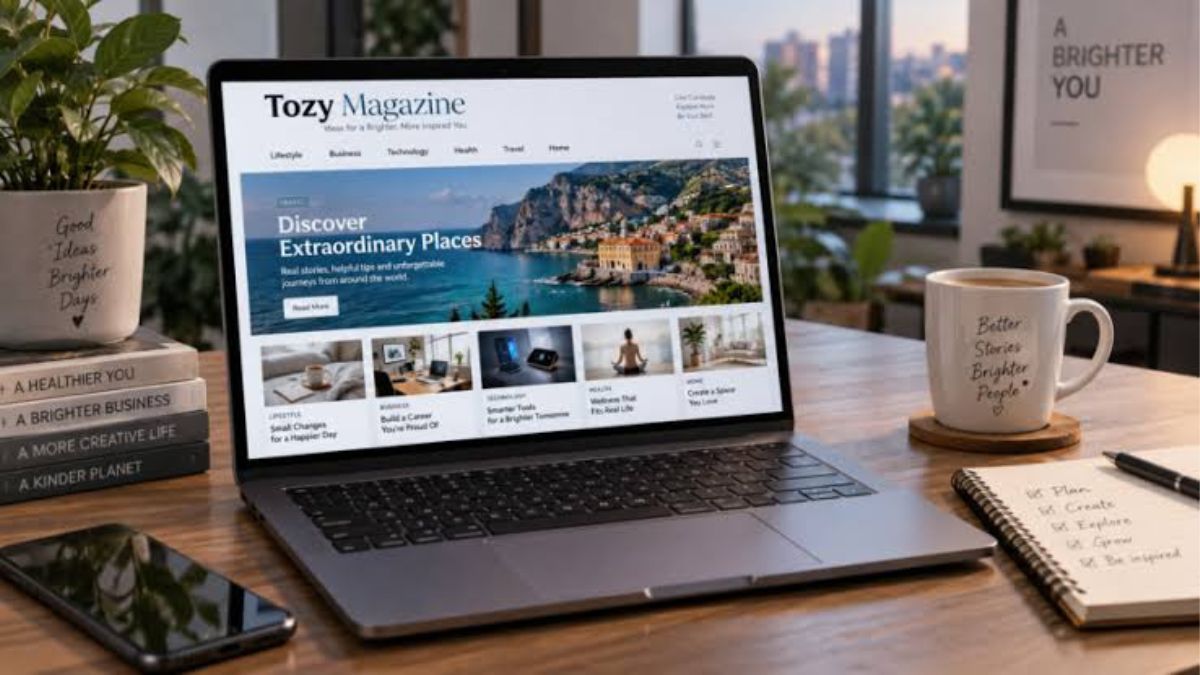
If you landed on tozymagazine.com looking for a birthday line, a wedding note, or a thank-you message, you are not imagining the original purpose of the site. That is where it started. Over time, though, the homepage has grown into something closer to a digital newsstand: occasion writing still lives there, but so do articles on business, technology, travel, health, home projects, fashion, and everyday lifestyle questions.
That mix can feel surprising the first time you scroll. One tab offers ready wording for a card. The next walks through a roofing warning sign, a slow office network, or a beach rental checklist. Used with a clear plan, the site can still be useful. Used without a filter, it can scatter your attention. This guide explains what the publication is, what you will actually find, and how to read it without wasting time.
What Tozymagazine.com Is in Plain Terms
Tozymagazine.com is a general-interest online magazine. Its About positioning still leans on the “power of words” for birthdays, marriages, anniversaries, and thank-you notes. Its live categories now stretch far beyond greetings.
Think of it as two layers stacked on one domain:
- A sentiment layer: quotes, wishes, captions, and message starters.
- A magazine layer: explainers and how-to pieces across everyday topics.
Neither layer is a specialist journal. The site is not a hospital, a law firm, a bank, or a trade association. Treat practical claims the way you would treat any broad consumer blog: useful as a first pass, not as the last word on medicine, money, or safety.
How the site evolved
Early pages focused on moments people already know they need language for. A birthday for a teacher. An anniversary caption. A short thank-you when you do not want to sound stiff. Those pages still exist and still serve that job.
Later publishing added volume in other verticals. That is why a reader looking for “happy anniversary” can end up next to a wastewater interceptor article or a private-investigator training explainer. The editorial mix is wide on purpose. Breadth brings more search traffic. Breadth also means quality varies by page.
Who the site is for
The site fits a few specific reader jobs:
- You need a first draft of a personal message and will rewrite it in your own voice.
- You want a quick orientation on a lifestyle or home topic before you talk to a specialist.
- You are browsing for ideas, not for certified advice.
It is a weaker fit if you need peer-reviewed health guidance, licensed legal analysis, or investment recommendations.
What You Will Find on Tozymagazine.com Today
The current category map is the most honest tour of the site. Occasion content sits beside Business, Education, Travel, Health, Lifestyle, Fashion, Food, Auto, Home Improvement, and Tech.
| Content cluster | Typical reader job | Best use | Extra caution |
|---|---|---|---|
| Birthday, marriage, anniversary, thank-you | Need wording fast | Starting draft for a card or caption | Personalize names and memories |
| Lifestyle and fashion | Inspiration and product context | Compare options and questions to ask | Check dates and local availability |
| Travel | Trip planning ideas | Build a pre-booking checklist | Confirm rules, seasons, and listings |
| Home improvement | Spot problems early | Know when to call a pro | Do not treat it as a repair manual |
| Business and tech | Understand a workplace issue | Frame the problem before you hire help | Verify specs and vendor claims |
| Health-adjacent topics | Learn the vocabulary | Prepare questions for a clinician | Never substitute for medical care |
Occasion writing that still works
The original strength of the site is practical language. A generic wish is fine as scaffolding. It becomes useful only after you add one specific detail: a shared joke, a place, a habit, a year.
A simple rewrite pattern:
- Take the ready line.
- Drop in the person’s name.
- Add one memory only you would know.
- Cut any phrase you would never say out loud.
That last step matters. If the sentence sounds like a greeting-card factory, readers feel it immediately.
Magazine topics beyond greetings
Recent publishing shows how far the mix has stretched. You may see workplace networking problems, construction glass damage at handover, retirement living arrangements, custom printed shirts, beach rental checks, jewelry for milestones, or roofing warning signs.
That range can help you scan a subject you do not follow every week. It can also hide thin or promotional pages next to stronger explainers. Open the article, look at the date, and ask whether the writer is describing a process or selling a local service.
How to Read Tozymagazine.com Without Getting Lost
Search intent on a multi-topic magazine is messy. People arrive with different jobs. Match the page to the job before you trust the conclusion.
A simple reading framework
Use this three-pass filter:
- Identify the job. Are you writing a message, planning a trip, or diagnosing a house problem?
- Check the page type. Is it a list of wishes, a how-to, a local service explainer, or a product comparison?
- Decide the next action. Rewrite the text, book a specialist, or leave and verify elsewhere.
If the article touches health, law, finance, or structural safety, the next action should almost always be verification outside the site.
| Reader goal | Page signal to look for | Smart next step |
|---|---|---|
| Write a personal message | Lists of wishes or quotes | Rewrite in your voice |
| Plan a weekend or trip | Checklists and “confirm before booking” language | Cross-check official listings |
| Fix a home or office issue | Warning signs and “call a professional” notes | Hire licensed help |
| Understand a business tool | Definitions and process steps | Compare two independent sources |
| Research a health or legal topic | General overview only | Speak with a qualified professional |
Practical examples
Say you need an anniversary caption. Open the occasion page, steal the structure, then replace half the words. “Another year with you” becomes “Another year of Sunday market walks and burnt toast.” The second version belongs to your life.
Say your office network crawls. An explainer can list causes beyond “buy a faster plan”: congested Wi-Fi, aging hardware, too many cloud tools on a weak local network. Use that list in the ticket you send your IT person. Do not treat a magazine article as a network audit.
Say a rental listing in a beach town looks perfect. A “five things to confirm” article can remind you to check parking, storm policy, and actual bed count. Then you still read the host contract.
Pros and Cons of Using Tozymagazine.com
Pros
- One domain covers greetings and everyday magazine topics.
- Occasion pages give a fast first draft when you are stuck.
- Category variety helps casual research across lifestyle, travel, and home subjects.
- Recent publishing means the site is active, not abandoned.
- Short, readable articles suit quick scanning.
Cons
- Editorial focus is broad, so depth varies widely.
- Some pages read closer to local service promotion than independent reporting.
- Health, legal, and financial topics need outside verification.
- The original greeting identity and the current general-interest mix can confuse first-time visitors.
- Dates and local details can go stale on product or travel pieces.
Common Mistakes Readers Make
Copying a wish word for word. The recipient hears the template, not you.
Treating every article as expert advice. A readable explainer is not the same as a licensed inspection.
Ignoring the publish date. Travel rules, product models, and home codes change.
Assuming a U.S. edition exists because some articles mention American towns. The site is a general publication, not an official national magazine franchise.
Clicking the first result and stopping. On mixed-topic sites, the first page may be adjacent to your question rather than the answer.
Best Practices for Getting Value From the Site
Stay in one job per visit. If you came for a wedding message, finish that draft before you wander into wastewater engineering.
Personalize every borrowed line. One concrete detail beats five polished clichés.
Use checklists as checklists. They shine when they tell you what to confirm, not what to believe.
Verify anything with money, health, or safety attached. Call the tradesperson, the clinic, or the official tourism board.
Watch for local service framing. An article that names a city contractor can still teach you the questions to ask. It should not be your only quote.
Keep a short swipe file. Save three message structures you like. Reuse the structure, never the exact paragraph.
| Habit | Why it helps | What to avoid |
|---|---|---|
| One-task visits | Stops topic hopping | Opening five unrelated tabs |
| Rewrite every wish | Makes the note sound human | Pasting a full canned paragraph |
| Date-check articles | Catches stale travel or product advice | Sharing last year’s details |
| External verification | Protects health, legal, and money decisions | Acting on a single blog claim |
| Question-first reading | Turns vague posts into useful prep | Accepting conclusions at face value |
Conclusion
Tozymagazine.com works best when you treat it as a mixed magazine with a greeting-card past, not as a single-subject authority. Come for language when you need a starting sentence. Stay for a checklist when you are planning a trip or spotting a home issue early. Leave and verify when the stakes rise.
The site’s range is the feature and the flaw. Breadth makes it easy to land there from search. Discipline is what makes the visit worth it. Take the useful draft, take the questions, and write the final version in your own words.
5 SEO FAQs
What is tozymagazine.com? It is a general-interest online magazine that began with birthday, marriage, anniversary, and thank-you messages and now also publishes articles on lifestyle, travel, business, technology, health, fashion, and home topics.
Is Tozy Magazine only for greeting messages? No. Occasion writing is still part of the site, but current categories cover a much wider set of everyday subjects.
Can I use wishes from the site as they are written? You can use them as a first draft. The note lands better when you add a name and one personal detail, then cut language you would not say yourself.
Is tozymagazine.com a reliable source for medical or legal advice? No. Use those articles only to learn basic terms, then confirm decisions with a qualified professional.
Does the site have an official USA edition? No. It is one general publication. Some articles mention American places, but that does not make it a national franchise edition.
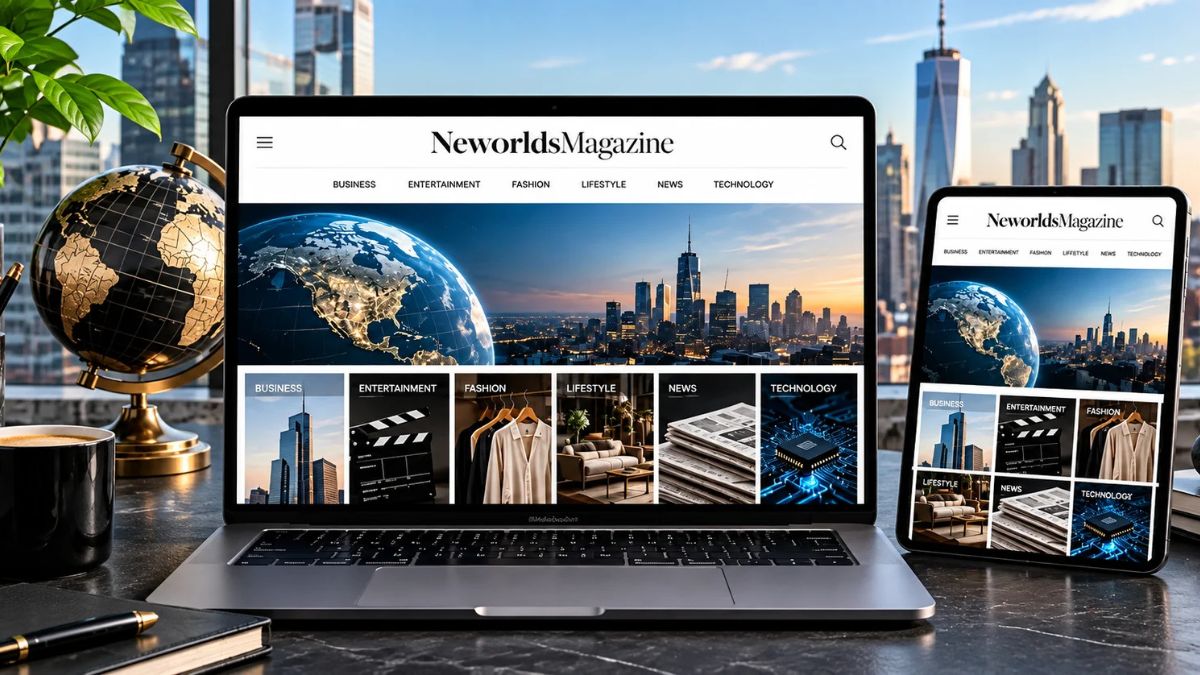
If you typed neworldsmagazine.com into a search bar, you were probably trying to answer a simple question: what is this site, and is it worth your time? New Worlds Magazine is an online publication that mixes history, culture, and everyday practical reading. It started with a storytelling pitch—connect the past to the present—and grew into a broad digital magazine covering home, business, entertainment, fashion, lifestyle, news, and technology.
That mix can feel confusing at first. One article might walk through memory care for aging parents. The next might compare window tint percentages or explain parking lot maintenance. The site is not a niche journal. It is a general-interest magazine that uses short, searchable stories to reach readers who want answers, ideas, and context in one place.
What New Worlds Magazine Actually Publishes
New Worlds Magazine presents itself as more than a news dump. Its public positioning emphasizes stories that link history and culture to modern life. In practice, the homepage looks like a multi-category blog: practical guides, product explainers, lifestyle tips, entertainment notes, and business pieces.
That gap between brand story and published mix is useful to understand. Readers who arrive expecting only historical essays will find plenty of how-to content. Readers who want lifestyle and consumer advice will find a lot of it.
Core categories you will see most often
The site regularly groups content under headings such as:
- Home and home improvement
- Health and family care
- Business and money
- Entertainment and culture
- Fashion and lifestyle
- News and everyday practical topics
- Technology and automotive
The tone is usually conversational. Paragraphs stay short. Many posts aim at a reader who wants a decision, a checklist, or a plain-English explanation rather than academic analysis.
How the site frames its mission
The magazine’s own language talks about uncovering overlooked stories and treating history as a living conversation. That mission still shows up in some features. It sits beside a much larger volume of evergreen search content: movers, dental care, smart switches, travel, games, and local-style consumer guides.
If you treat neworldsmagazine.com as a digital magazine with a wide beat, the mix makes more sense.
Who Neworldsmagazine.com Is For
The site works best for three kinds of readers.
Curious browsers who like jumping from culture to home advice without changing websites.
People researching a specific decision—hiring movers, choosing window film, understanding respite care—and landing on a practical article.
Writers and marketers looking at how a multi-niche publication organizes categories and headlines.
It is less useful if you want a tightly edited specialist magazine with a single voice. Quality and depth can vary from post to post because the catalog is large and topic range is wide.
How to Read the Site Without Getting Lost
A multi-category magazine rewards a simple reading method.
Start on the homepage for the newest mix. Then use category pages instead of infinite scrolling. Home, Health, News, Automotive, and Entertainment each behave like mini-sections. If you care about one subject, stay inside that section for a few articles. You will get a clearer sense of the site’s range than you will from random clicks.
When you open an article, look for three things: a clear problem in the first lines, a list or table that you can scan, and a conclusion that tells you what to do next. The stronger posts follow that pattern. Weaker posts wander across topics that do not belong together.
A simple reading framework
| Reader goal | Best starting point | What to look for | Skip if… |
|---|---|---|---|
| Quick practical answer | Category page + latest how-to posts | Checklists, comparisons, next steps | The article never states a decision |
| Culture and storytelling | Features that mention history, travel, or entertainment | Context, named examples, a point of view | The piece is only a product list |
| Site overview | Homepage + two category archives | Range of topics and writing style | You expected a single-niche journal |
This framework keeps you from treating every headline as equally useful.
What Makes New Worlds Magazine Different From a Typical Blog
Plenty of sites publish lifestyle posts. The difference here is branding plus breadth.
The magazine sells a “new worlds” idea: past, present, and future in one reading habit. Then it publishes across consumer categories that search engines reward. That combination can help a reader who wants both inspiration and utility. It can also make the brand feel less focused than a classic magazine.
Another difference is the contributor model. Much of the catalog reads like guest or freelance work gathered under one masthead. That is common for growing digital magazines. It explains why some articles feel tightly edited and others feel like standalone guides dropped into a category.
Practical examples of the mix
A health section may explain respite caregivers and memory care. A home section may compare vinyl and chain-link fencing for families with kids and dogs. An entertainment post may cover live music for a corporate event or a game-season update. A news-style piece may discuss parking lot safety or cheap weekend flights.
None of those topics contradict a general-interest magazine. Together they show the real product: a wide content net, not a single subject.
Pros and Cons of Using Neworldsmagazine.com
A fair review needs both sides.
Pros
- Broad topic coverage in one destination
- Short paragraphs and scannable headings
- Useful for everyday decisions, not only news
- Category structure that is easy to browse
- Mix of lifestyle and practical explainers
Cons
- Brand story and published mix do not always match
- Quality can vary between articles
- Some posts feel more like search guides than magazine features
- Harder to form a loyal “this is my magazine” habit if you want one consistent voice
- Easy to bounce if you arrived expecting only history and culture
For many readers, the pros win when they treat the site as a library of useful articles rather than a single editorial product.
Common Mistakes Readers Make With Multi-Niche Magazines
People often misread sites like this. The mistakes are predictable.
They judge the whole magazine by one weak article. One thin post does not define every category.
They ignore category pages and only use the homepage. The homepage is a teaser. Archives show the real range.
They expect newspaper-level reporting on every topic. Many posts are explainers, not investigations.
They bounce after a mismatch. If you searched a domain name, start with “what is this?” Then pick one category that matches your interest.
They treat every comparison table as gospel. Use tables as starting points. Confirm details that affect money, health, or legal choices.
Best Practices for Getting Value From New Worlds Magazine
Use the site the way a good magazine stand works: sample, then specialize.
Pick one category and read three recent posts. That tells you more than ten random headlines.
Save articles that include a checklist or a comparison. Those are the pieces most likely to help later.
Read the first two paragraphs before committing. The better posts state the problem immediately.
Cross-check anything that involves contractors, medical care, travel rules, or product safety. A magazine explainer is a guide, not a substitute for local advice.
If you like the storytelling side, look for pieces that name people, places, and history instead of generic “tips” headlines. That is closer to the magazine’s original pitch.
Content-type comparison at a glance
| Content type | Typical length of value | Best use | Watch-out |
|---|---|---|---|
| How-to / checklist | Immediate | Decisions you will make this week | Over-simplified steps |
| Comparison guide | Medium | Choosing between two options | Missing local or legal caveats |
| Lifestyle feature | Longer browse | Ideas and context | Soft claims without examples |
| News-style explainer | Short | Awareness and orientation | Dated details if not updated |
Editorial strengths versus reader expectations
| Promise readers hear | What they often find | How to adjust |
|---|---|---|
| History and culture first | Broad consumer and lifestyle coverage | Use culture posts as extras, not the whole site |
| One magazine voice | Multiple writing styles | Judge sections, not only the brand |
| Daily inspiration | Search-friendly explainers | Come with a question, not only a mood |
Those tables are the fastest way to set expectations before you spend an evening clicking.
Conclusion
Neworldsmagazine.com is the home of New Worlds Magazine, a digital publication that pairs a culture-and-storytelling identity with a wide general-interest catalog. You will find home advice next to health explainers, entertainment notes, business pieces, and technology guides. That range is the point.
Visit with a clear intent. Use categories. Read for decisions and context. Skip the idea that every article must feel like a classic magazine essay. Do that, and the site becomes a useful stop rather than a confusing domain name.
If you want a single sentence for search intent: New Worlds Magazine is an online general-interest magazine at neworldsmagazine.com that covers culture, lifestyle, and practical everyday topics in short, readable articles.
5 SEO FAQs
What is neworldsmagazine.com?
It is the website for New Worlds Magazine, an online publication covering home, business, entertainment, fashion, lifestyle, news, technology, and culture-focused stories.
Is New Worlds Magazine a print magazine?
The current public presence is digital. The site functions as an online magazine and blog with category archives rather than a newsstand print schedule.
What topics does New Worlds Magazine cover?
Common topics include home improvement, health and family care, business, entertainment, fashion, travel-style lifestyle pieces, news explainers, automotive advice, and technology.
Who should read New Worlds Magazine?
Readers who want practical guides and general-interest stories in one place. It is less ideal for people who only want a single specialist niche.
How do I navigate the site efficiently?
Open a category that matches your interest, read a few recent posts, and use checklists or comparison sections as the main takeaway.
-

 HEALTH7 months ago
Benefits of Drinking Lemon with Warm Water Daily
-

 BLOG5 months ago
Soundgasm: A Complete Guide to the Popular Audio Sharing Platform
-

 BLOG7 months ago
Bijnesh: Meaning, Origin, Cultural Significance, and Modern Relevance
-
 CRYPTO7 months ago
Crypto.com Credit Card: Complete Guide to Rewards, Benefits, and How It Works
-
 BUSINESS5 months ago
Outsourcing Customer Service: A Complete Guide to Benefits, Challenges, and Smart Strategies
-

 BUSINESS6 months ago
Deshoptec com: A Complete Guide to Understanding Deshoptec com in the Modern E-Commerce World
-

 HEALTH7 months ago
Palo Azul Benefits: Complete Guide to Uses, Nutrition, and Wellness Potential
-

 CRYPTO7 months ago
ALBT Coin Price: Market Trends, Analysis, and Future Outlook